

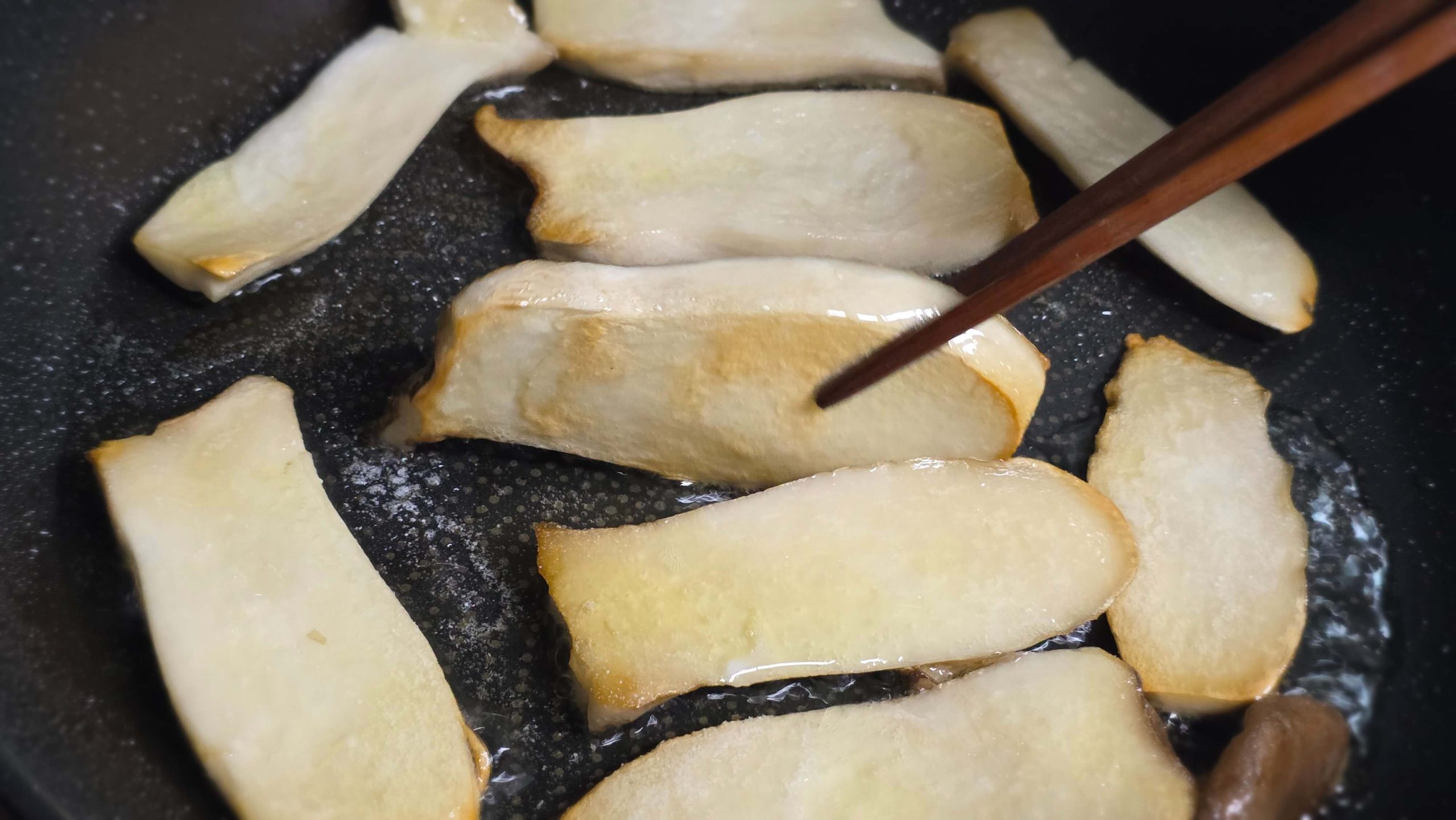
A Simple Pan, A Different Taste
I wasn’t trying to cook anything special.
Just mushrooms in a pan.
Olive oil, sliced king oyster mushrooms,
and a small pinch of salt.
That was all.
But something was different.
Not the ingredients.
Not the method.
The way I was sensing it had changed.
I didn’t know it then,
but I was cooking with senses.
A Pinch That Decides Everything
I added salt.
Not by measuring,
but by feeling.
One pinch… maybe two.
There is a moment when you stop.
Not because the recipe says so,
but because something inside says,
“That’s enough.”
That moment used to be unclear to me.
Now, it’s obvious.
My daughter tasted it before leaving for her kendo class.
“This is really good,” she said.
“You’ve perfected this.”
I smiled.
Because I hadn’t “perfected” anything.
I was just… sensing.
This is where taste begins—
Not in the recipe,
but in awareness.
When Taste Becomes Clear
At lunch, something similar happened.
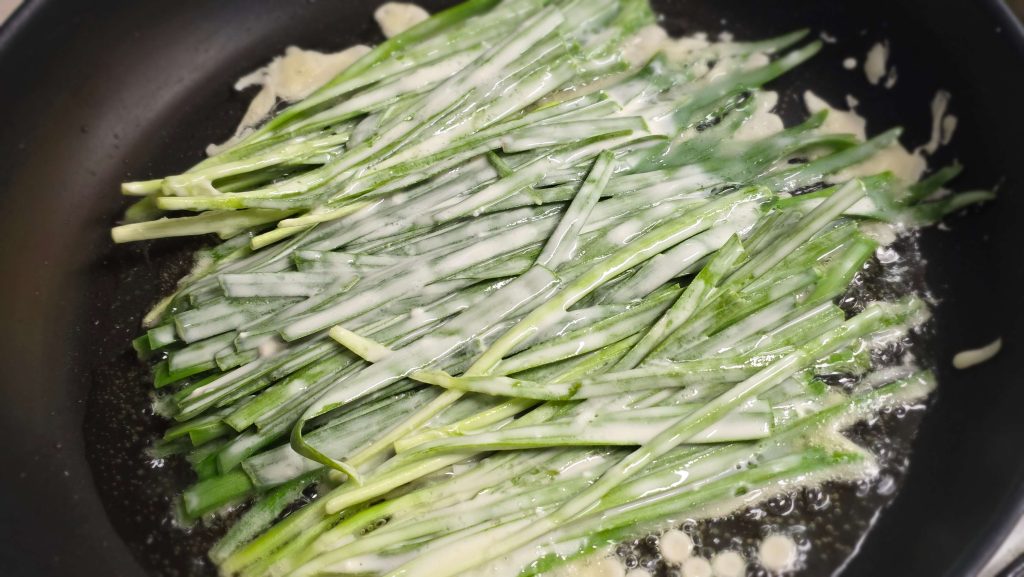
I made buchujeon, a Korean chive pancake,
and a light gochujang-vinegar dipping sauce.
My son took a bite and said,
“It’s a bit strong.”
So I asked him.
“Is it too sour?”
“Too sweet?”
“Or not sweet enough?”
He tilted his head slightly,
unsure what exactly felt off.
Later, I tasted it myself.
The vinegar stood out too much.
The sweetness was slightly lacking.
So I added a small amount of organic sugar.
And suddenly,
the sharpness softened.
The balance settled.
Nothing dramatic.
Just a small shift.
But it changed everything.
Taste is not about knowing.
It’s about noticing.
It Wasn’t Always Like This
There was a time
I couldn’t taste like this at all.
After getting married,
I always asked my husband to check the seasoning.
“Is it okay?”
“What does it need?”
I genuinely didn’t know.
Even when I cooked,
I couldn’t feel the taste.
I wasn’t cooking with senses back then.
But now, I know exactly when to add one last pinch of salt.
Or when a soup needs kelp at the end.
Or when dried mushroom stems deepen the flavor just enough.
These are not techniques I memorized.
They are sensations I can now recognize.
Cooking changed
when I stopped guessing
and started sensing.
The Difference Is Not the Recipe
My husband once said,
“My father really liked your kimchi soup.”
That stayed with me.
Because I knew something had changed.
Not just the soup.
Me.
There are times when people say
someone’s cooking isn’t as good as before.
It’s not always about age or skill.
Sometimes, it’s something else.
So I said,
“Food tastes good
when your senses are alive.
Without that,
even cooking won’t taste right.”
The quality of food
reflects the state
of the person making it.
The Real Ingredient
You can use better ingredients.
Better recipes.
But that’s not what makes the difference.
The real ingredient is this:
How awake you are while you cook.
Because taste is not just on the tongue.
It’s in attention.
In timing.
In knowing when to stop.
Closing
I didn’t learn a new recipe.
I just became more sensitive
to what was already there.
And that changed
everything on the plate.
→ Why I Keep Making Bread — The Feeling That Brought Me Back