

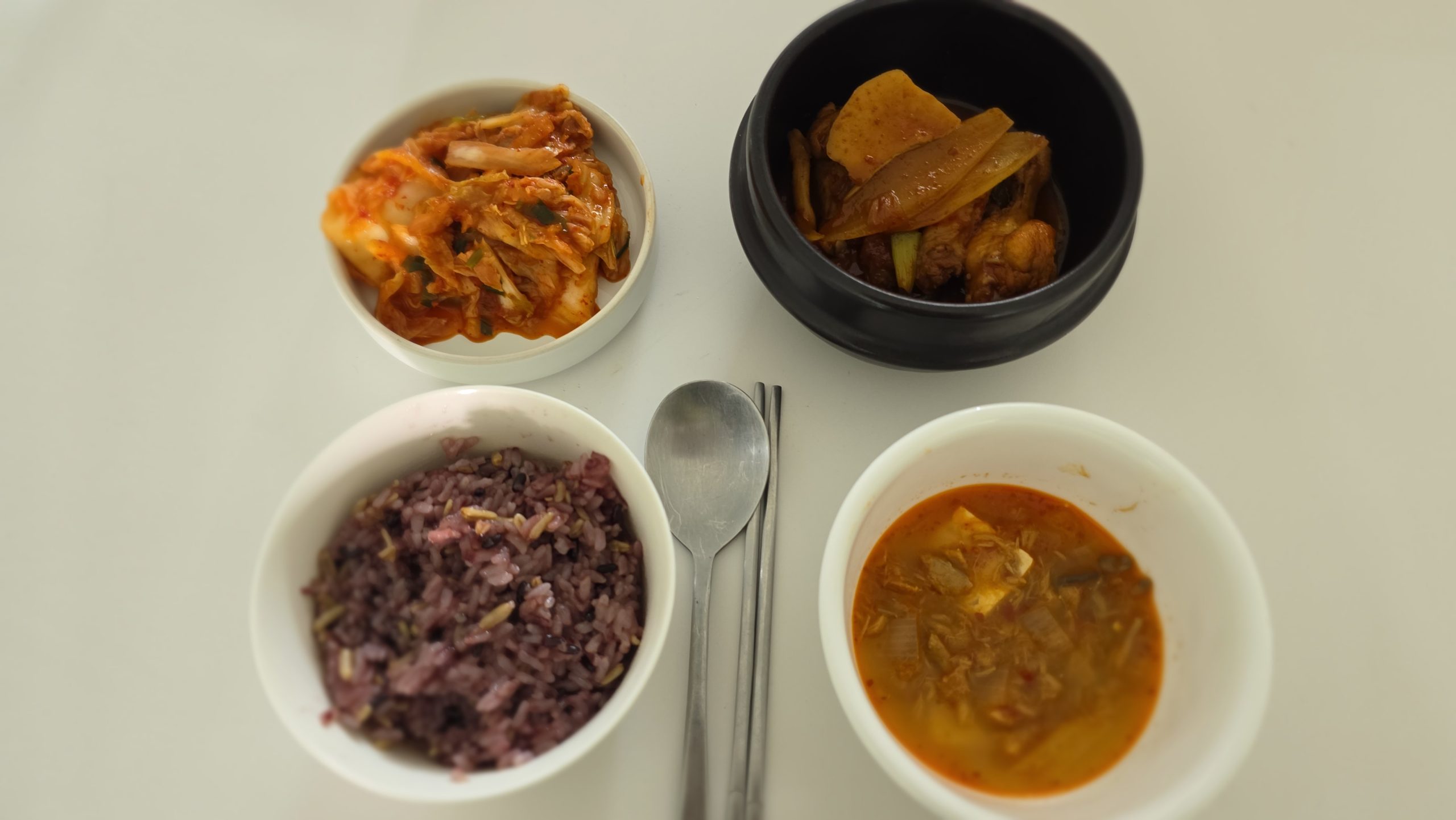
Will the rice go down okay without soup?
My husband usually had an apple and two boiled eggs for breakfast.
But that morning, he was going to the mountains to cut grass around the family graves before Chuseok.
“It would be better to eat rice before doing that kind of work,” he said.
The day before, after playing a round of par-3 golf together, we had stopped by a large supermarket nearby to buy some things for Chuseok. I bought two fresh mackerel and sprinkled them with coarse salt at home. That morning, I grilled one.
I toasted a sheet of dried seaweed and poured a little soup soy sauce into a small dish with a few drops of sesame oil for dipping. I put the grilled mackerel on the table along with some store-bought mat kimchi, cut cabbage kimchi.
I watched my husband eat, told him to have a good day, and left to write at a cafe near our apartment.
When I came home about an hour later, he was gone. He had put all his dishes in the sink.
Every one of them was empty. Even the plate of sliced apple.
Oh. It doesn’t have to be my kimchi.
I laughed to myself.
A few days earlier, my husband and I had gone out for dinner together.
He told me about a recent dinner with his friends.
“One of them brought a little kimchi. It was delicious. I said, ‘This is good. My wife hasn’t been making kimchi lately.’”
He was laughing, but I felt a little heavy.
Should I make kimchi?
I don’t really want to.
Kimchi on the Table
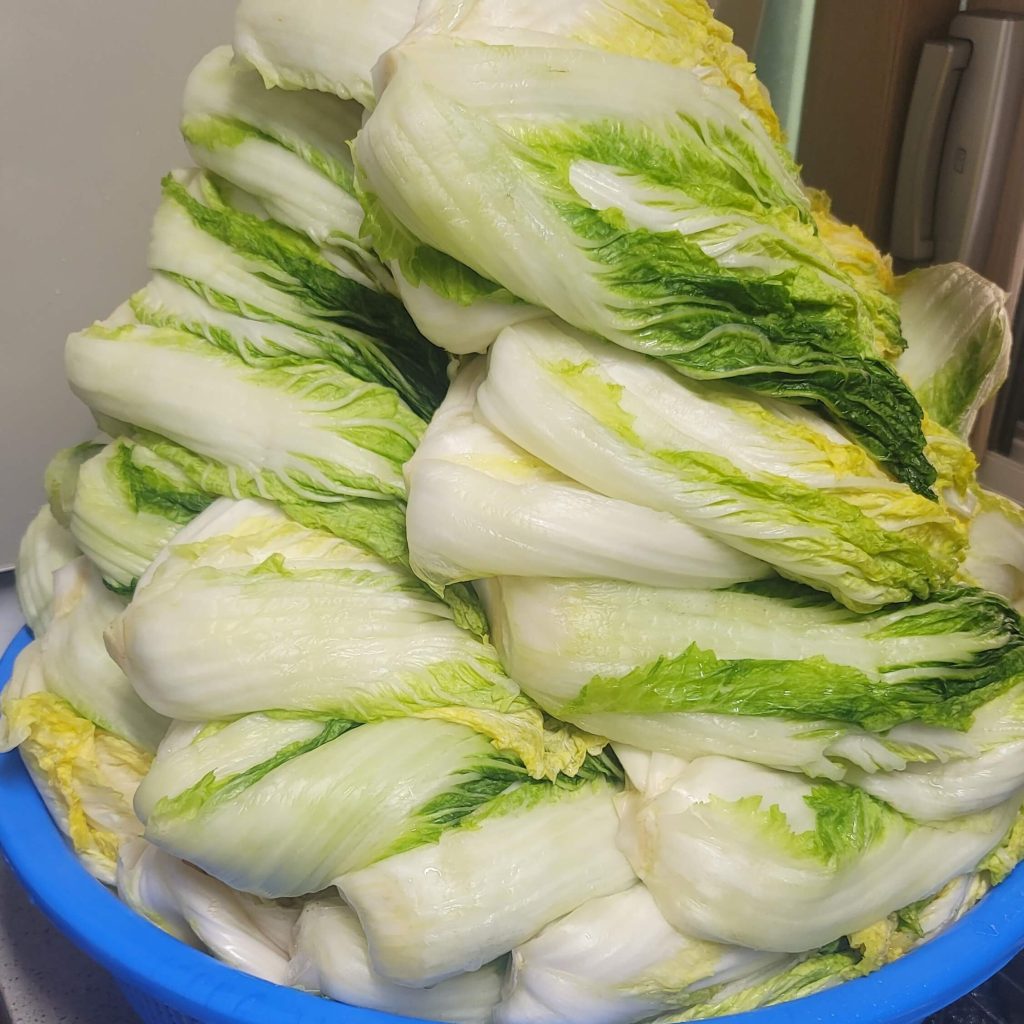
Years ago, I used to make kimchi with a hundred heads of napa cabbage by myself.
I would fill the kimchi refrigerator with enough to last more than a year and make sure there was always kimchi on the table.
Well-fermented kimchi was useful for all kinds of things. I made soup with it when someone had a cold. Sometimes I made kimchi jjigae with pork, sometimes with tuna. I also made kimchi pancakes, fried rice, rice balls, noodle soup, and gimbap.
Even when we lived in a small officetel in Seoul with a tiny kitchen, making ten heads of cabbage at a time was normal for me. I would make batch after batch until the kimchi refrigerator was full.
But after we moved into this house last year, things slowly began to change.
Our son was living with us, and we started eating a lot more vegetables.
Fresh vegetable side dishes, quickly seasoned just before eating, began to change our table.
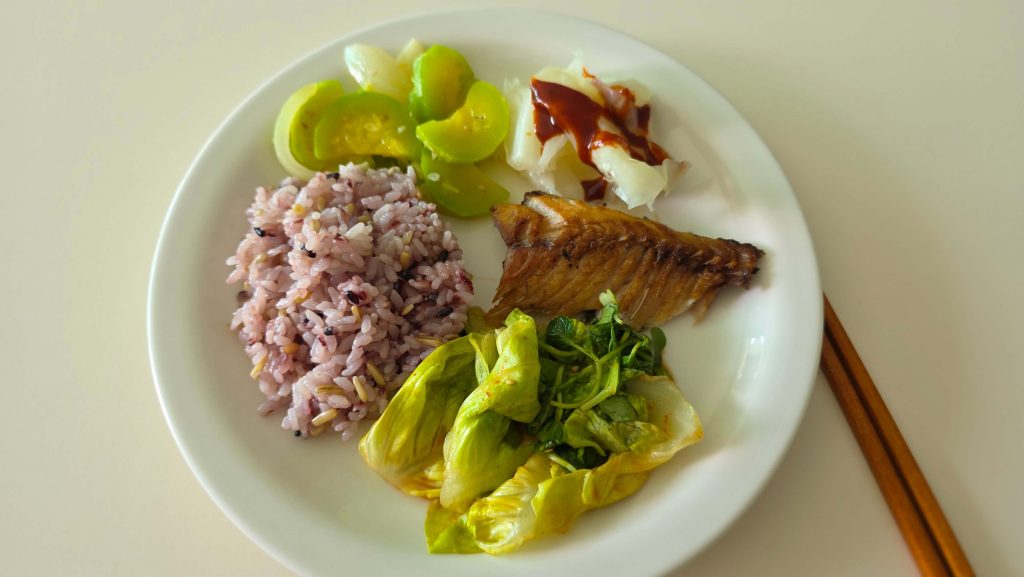
Spicy, tangy, slightly sweet cucumber salad. Fresh greens tossed with the same kind of seasoning. Onions and shiitake mushrooms sautéed with just a little salt. Zucchini sautéed with salted shrimp.
To my surprise, I began to feel that those were enough even without kimchi.
When I used to make all that kimchi, I hardly made other vegetable side dishes. Kimchi itself was the side dish, and dishes made with kimchi were often the main dish.
Back then, I liked it that way.
Even in the middle of winter, I didn’t mind salting all those cabbages with coarse salt, rinsing them in cold water, mixing a huge tub of seasoning, and rubbing it between layer after layer of cabbage leaves late into the night.
I thought it was better to work hard once and be comfortable afterward.
No Kimchi
For several days after we ran out of napa cabbage kimchi, he had been eating sliced onion and cucumber dipped in gochujang.
The previous summer, when we visited his parents, my mother-in-law said she didn’t have any kimchi.
“Even when I make it, we don’t eat much of it.”
She sliced some onion and cucumber and put out store-bought ssamjang for dipping.
Everyone ate it just fine.
I remember being a little surprised.
No kimchi…?
But after watching my husband dip onion and cucumber into ssamjang and eat them, I started doing the same thing at home.
I asked my husband whether he wanted the ssamjang I had seasoned myself or gochujang.
“Gochujang.”
So I gave him gochujang.
This is easy.
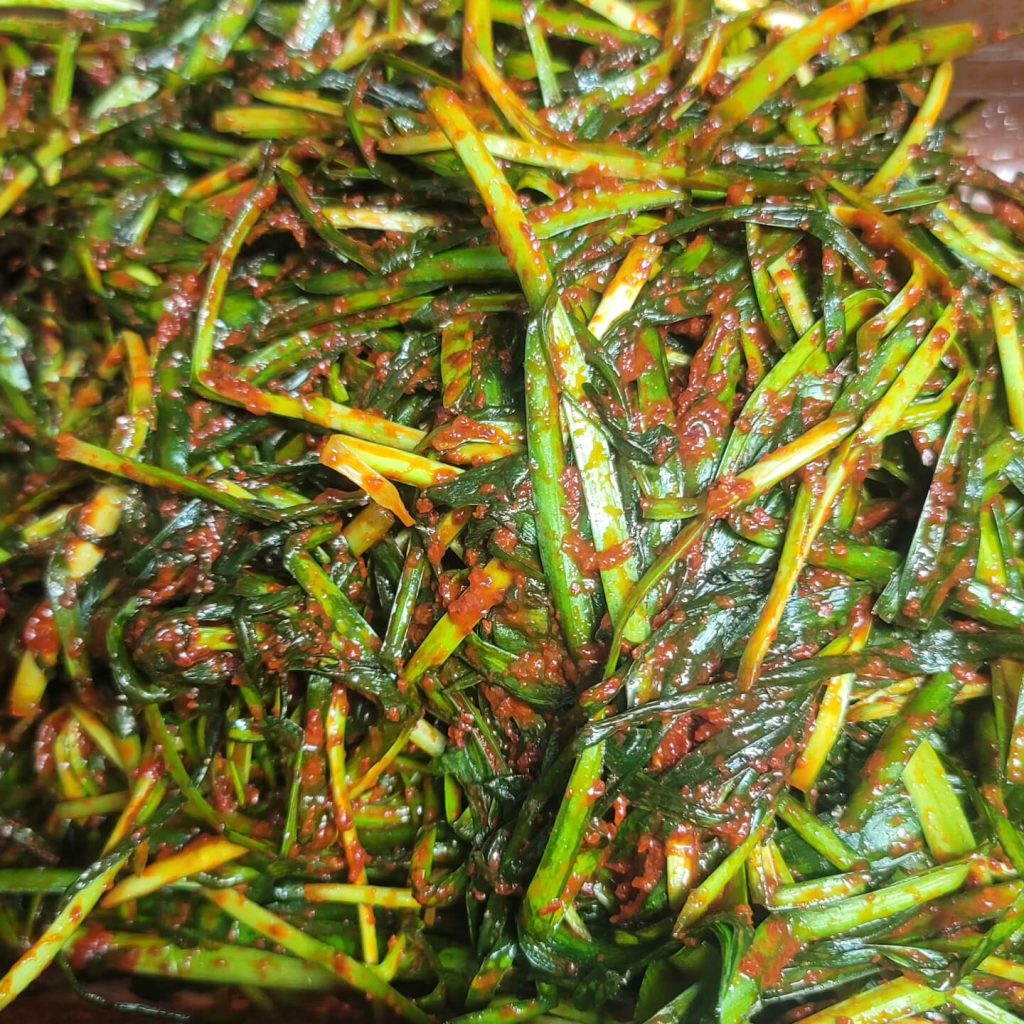
Then one day, I made a quick batch of kimchi with two bunches of chives. Napa cabbage had to be salted first, which felt like too much trouble, so I made chive kimchi instead.
I watched him eat and laughed.
“We’re fine without kimchi.”
“I can’t be without kimchi,” he said.
“It’s too much work.”
I went into the bedroom for my fifteen-minute rest.
A few days later, something suddenly occurred to me.
Ah. Maybe it’s because of what I’ve been telling him.
“If you want something, you have to say so.”
Sometimes, on my way home from writing at the cafe in the morning, I would bring our daughter an iced Americano.
My husband would look at it and say,
“What about mine?”
“You have to tell me if you want one. You don’t usually drink coffee in the morning.”
I had said that to him several times.
And now he was suddenly telling me, over and over, that he needed kimchi.
Bag After Bag
That evening, on my way out for a walk with my daughter, we stopped at the supermarket and bought a bag of mat kimchi.
My husband liked it.
My daughter and I liked it too.
Our son didn’t even look at it.
“I used to buy this when I studied in the UK. It was good. I saw the same kimchi in Japan too when our son was living there.”
“Oh, so this must be the kind foreigners buy,” my husband said.
“Yeah. I saw it a lot abroad.”
I bought another bag.
Then another.
I let them ripen a little in the regular fridge before moving them to the kimchi refrigerator, and kept serving them to my husband.
“Your kimchi tastes better, Mom.”
My daughter wasn’t very interested in it after that. But my husband kept eating it.
One Cabbage in the Fridge
I started making lunch for my daughter and me.
I took a small napa cabbage out of the fridge. It had been sitting there for several days.
I had bought it to make a quick fresh kimchi, but I kept leaving it in the fridge because I couldn’t be bothered.
Oh, it’s organic, and it’s still fresh.
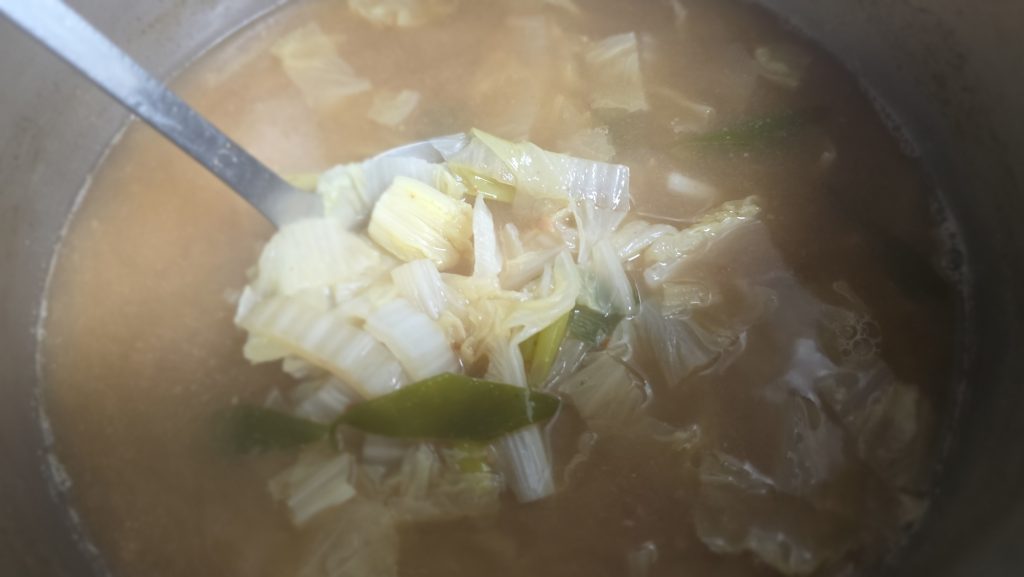
I pulled off a few damaged outer leaves to make napa cabbage soup.
I poured water into a pot and added shiitake mushroom stems I had saved in the freezer, dried anchovies, and kelp. Once the water came to a rolling boil, I took out the mushroom stems and kelp, dissolved some doenjang into the broth, and added sliced cabbage. I covered the pot and let it boil.
Then I added sliced green onion and some gochugaru. I covered it and let it boil again.
A little soup soy sauce.
Boil again.
Minced garlic.
Boil again.
I tasted it.
Some perilla seed powder would be good.
I added some, covered the pot, and let it boil once more.
I tasted it again.
Perfect.
I lowered the heat and let it simmer until the cabbage was soft.
I had also soaked some baby greens and head butter lettuce in water with a few drops of vinegar. I was going to dress them with the spicy, tangy, slightly sweet seasoning.
Then I suddenly couldn’t be bothered. Our son had already eaten, so there was no reason to make the seasoning he liked.
I just sprinkled the greens with salt and extra-virgin olive oil and made a simple salad.
My daughter and I ate the salad with multigrain rice, the napa cabbage soup, and some of the mackerel I had grilled early that morning for my husband.
It was delicious.
My daughter smiled.
“It feels like fancy Korean food. That cabbage soup was really good.”
“Right? I’ve gotten much better.”
I laughed and called out to my son.
“Try some later. I think you’ll like it.”
Once before, he had said my cabbage soup tasted watery.
The gochugaru really works.
In the past, I sometimes made a clear, mild cabbage soup. If I wanted a little heat, I sliced in Cheongyang chili peppers. Then I began to find them too sharp, so sometimes I cooked one whole in the soup and sliced it only into my husband’s bowl.
But this was the first time I had added gochugaru.
What should I do with the other cabbage in the fridge? Stir-fry it? Season it as a side dish?
I smiled, suddenly thinking about what delicious vegetable dish I could make with it.