

One morning,
I was standing in line at a café.
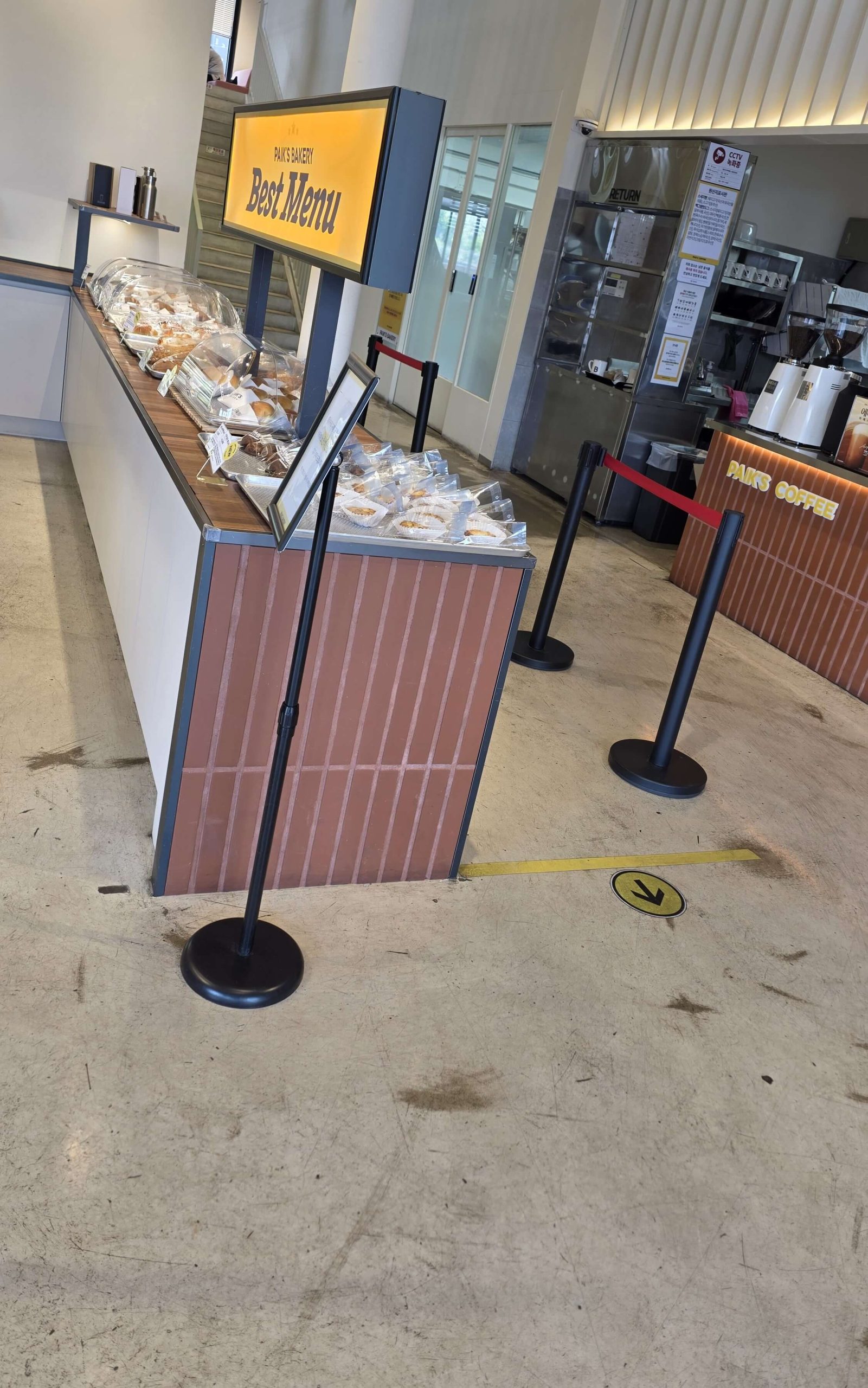
There was a yellow line
on the floor.
A standing sign nearby suggested that
bakery customers should wait there.
So I stood
where the café seemed to want
people to stand.
At the counter,
a woman was paying for her order.
Then three women approached,
carrying trays full of bread.
They placed their trays on the counter,
a short distance from the register,
while continuing their conversation.
A moment later,
the woman finished paying
and walked away.
It looked as though
the three trays would be next.
For a second,
I wondered what was happening.
They looked older than me.
Maybe there was some reason
the employee was about to serve them first.
I wasn’t sure.
So I hurried forward.
“I was here first.”
The employee immediately nodded
and took my order.
The three women stepped back.
No argument.
No problem.
The moment passed quickly.
But it left me feeling slightly unsettled.
One Small Moment
At first,
I didn’t think much about it.
It was simply one of those awkward moments
that happen in crowded places.
Then something similar happened again.
This time,
I was the one moving toward the counter.
And another customer spoke up.
“I was here first.”
For a moment,
I felt embarrassed.
I hadn’t been trying to cut in line.
I simply hadn’t noticed where she was standing.
Then I saw it happen again.
Two customers quietly discussing
who had arrived first.
No one seemed angry.
Just slightly confused.
And that’s when I started
paying attention.
The More I Watched
The yellow line was there.
The standing sign was there too.
But something about the space felt unusual.
The waiting area sat
closer to the bakery display.
The counter felt like
a separate destination.
And most people seemed to
respond to the counter first.
Not the signs.
Not the instructions.
The counter.
The person ordering.
The person standing nearby.
The things they could immediately see.
The more I watched,
the more interesting it became.
People weren’t looking for instructions.
They were simply responding to
what they saw.
The Café Kept Adjusting
Then I started noticing
small changes.
At first,
the standing sign sat
to the right of the yellow line.
But it didn’t seem to attract much attention.
Later,
the sign was moved closer to a pillar
near the counter.
I noticed the change,
but nothing seemed very different.
Then one day,
the sign appeared in a new spot.
Near the corner of the bakery display.
Right beside the yellow line.
This time,
it caught my attention immediately.
Anyone choosing bread would naturally see
both the sign and the waiting area.
I watched something interesting.
One customer stood behind the yellow line.
Then another joined.
Then another.
Soon,
five or six people were lined up perfectly.
For the first time,
the system seemed to work.
I honestly thought
the problem had been solved.
Maybe the sign was finally
in the right place.
Maybe the flow now matched the way
people actually moved through the space.
But a little later,
I noticed another change.
A new notice had appeared on the pillar.
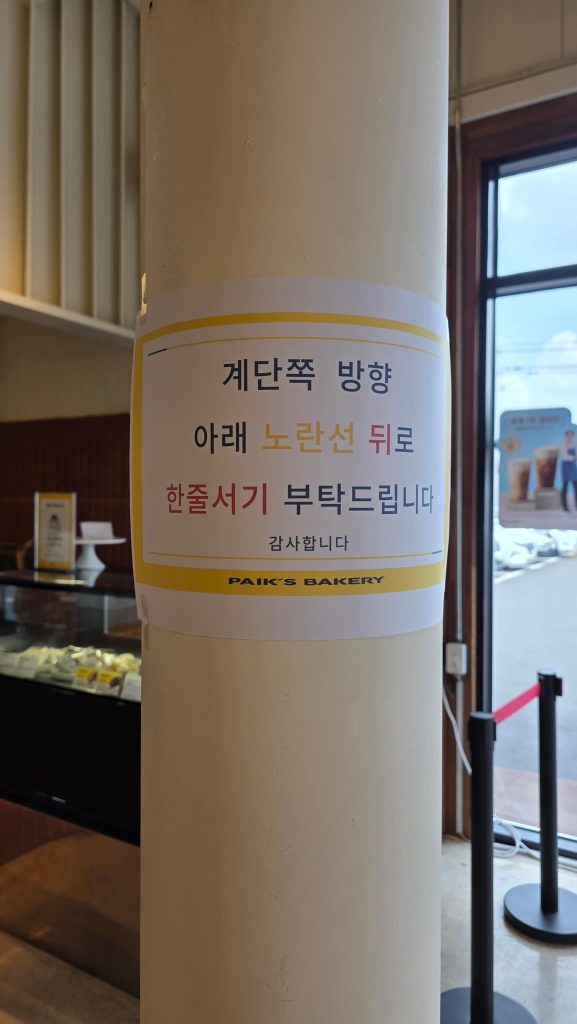
And the standing sign had been moved again,
slightly farther toward the bakery display.
That’s when I realized
the adjustments were still continuing.
The café was still trying to figure it out.
Mid-point
People weren’t ignoring the rules.
They were simply responding to
what they saw.
Sometimes
another person becomes
a stronger signal
than any sign.
Someone Stood There First
The day I saw five or six people line up perfectly,
I started wondering what had changed.
The signs looked almost the same.
The space looked almost the same.
Then I noticed something.
One person had stood there first.
Then another person joined behind them.
Then another.
Then another.
Soon,
a line had formed.
Not because everyone had read the signs.
Not because everyone understood the system.
But because someone showed them
where to stand.
And the others followed.
It reminded me of
a traffic light I pass
almost every day.
One driver stops
at the front white line.
Then another driver stops there.
Soon,
drivers in both lanes
are stopping there too.
Just people quietly responding
to each other.
A Different Way of Looking
At first,
I thought this was a story about a line.
Then I thought it was a story about signs.
Eventually,
I realized it was neither.
It was a story about attention.
About what people notice.
About the signals
we follow
without realizing it.
The café kept adjusting the environment.
Customers kept responding to
what felt most obvious.
And somewhere
between those two things,
the line appeared.
Disappeared.
Then appeared again.
The more I watched,
the less it felt like a problem.
And the more it felt like a reminder.
Most people aren’t trying to break rules.
Most people aren’t trying to be difficult.
They’re simply responding to
the signals around them.
Sometimes
the strongest signal in a space
isn’t a sign.
It’s the person
standing in front of us.