


“Bring me a bun when you come home.”
It was Saturday morning, and I was sitting at a cafe, writing as usual.
My husband was calling. He wanted me to bring home a red-bean bun, one of his favorites.
“Oh, I already bought one yesterday. I thought you might need it this morning,” I said.
The day before, he had suggested that we go golfing Saturday morning. But then he had to attend a wedding that afternoon.
On days when we went golfing, he liked to stop at a cafe before getting on the highway and get a red-bean bun and a decaf iced Americano to go.
So I had bought the bun Friday afternoon because they weren’t ready that early in the morning.
“It’s beside my desk, on the table by the wall. Under my white jacket.”
He listened until I finished.
“Oh,” he said. “I was going to eat it before I leave. Not now.”
Ah.
“Okay. I’ll be home soon.”
We hung up.
What was that?
There had been a trace of irritation in his voice.
It was small.
But I had heard it.
Maybe he had expected a very short conversation.
Bring me a bun.
Okay.
I would be home long before he left for the wedding. I could simply hand it to him.
I wouldn’t have explained where the bun was at all if I had known he was going to eat it later.
In fact, finding the bun would have taken some effort. I had put it beside my desk and covered it with my white jacket, so he would have had to listen carefully to my directions.
There was a reason I had hidden it.
If I left something I had bought for the next morning on the dining table, my husband sometimes ate it when he got hungry at night.
Maybe having to listen to all those directions had been enough for a little irritation to slip into his voice.
Or maybe it was something else.
I didn’t know.
What interested me was what happened inside me next.
For a long time, I had been quick to hear things like that—a slight change in someone’s tone, a little sharpness, a hint of annoyance.
Years ago, I might have felt hurt almost instantly.
Why does he sound annoyed with me?
And another thought could easily have followed.
I even thought of him and bought the bun yesterday. He didn’t ask me to. Why is he annoyed instead of being grateful?
There was another question I could easily have asked.
Why are you eating a bun before you go to a wedding?
Before the Argument
Once, a cafe owner casually told me that he had already fought with his wife that morning.
“We shouldn’t talk,” he joked. “Whenever we talk, we fight.”
Long before I was married, a senior colleague at the newspaper once told me about an argument he had had with his wife before work.
He had gone to shave and couldn’t find a disposable razor.
He told me about it with a smile.
“I yelled at her, ‘Why didn’t you buy me a razor?’ And she cried.”
Why would he yell at her over something like that?
I knew his wife too, and I remember thinking that she must have cried over something so small before going to work that morning.
But after I hung up with my husband that Saturday, I found myself thinking about the few seconds before something becomes an argument.
Maybe it starts with something very small.
A little irritation slips into someone’s voice.
The other person hears it.
Why are you talking to me like that?
And sends it back.
For a long time, I handled those moments differently.
At first, I often said nothing.
I would feel hurt, sometimes almost ready to cry, and keep it inside.
Then, perhaps once a year, everything would come out at once, and I would cry.
Later, I began asking.
Sometimes I sent my husband a message.
Why did you talk to me like that? Why were you annoyed with me?
His answer was often simple.
“I wasn’t.”
“I’m not good at saying things,” he once told me. “I’m grateful.”
Eventually, I stopped waiting and asked him right away.
“Why are you annoyed with me?”
Again, he would say, “I’m not.”
But that Saturday morning, something was different.
I had heard exactly what I had always been able to hear—that tiny trace of irritation.
Why is he annoyed with me?
That was what I had always thought right away.
But this time my question had changed.
Oh. There’s some irritation in his voice. What is that?
I was just curious.
The Bun Was Still There
When I drove home, my husband was sitting on a bench beneath the trees, looking at his phone.
His face looked relaxed.
“Let’s go to the par-three course tomorrow,” he said as I walked past.
“We’ll see what the weather is like,” I said, and kept walking toward home.
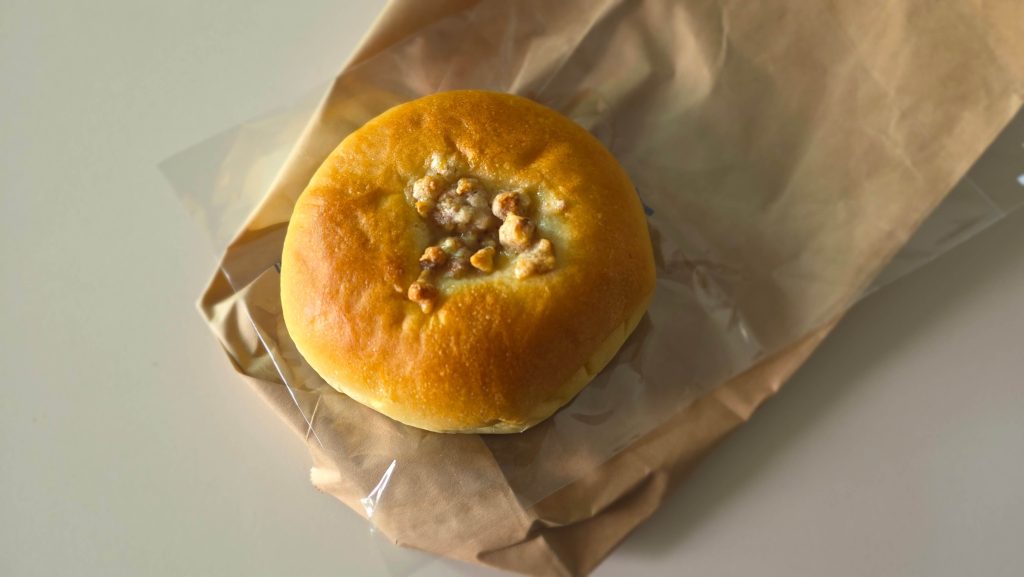
When I went into the bedroom, the red-bean bun was exactly where I had left it, under my white jacket beside my desk.
Of course it was.
He wasn’t planning to eat it until around eleven thirty, before leaving for the wedding.
I picked it up and put it on his desk.
Then It Was Yeast
Later, I was about to make bread dough.
I poured milk and sugar into a large bowl. I made some green tea and put on music.
I wanted to enjoy making the bread.
Then I reached for the yeast.
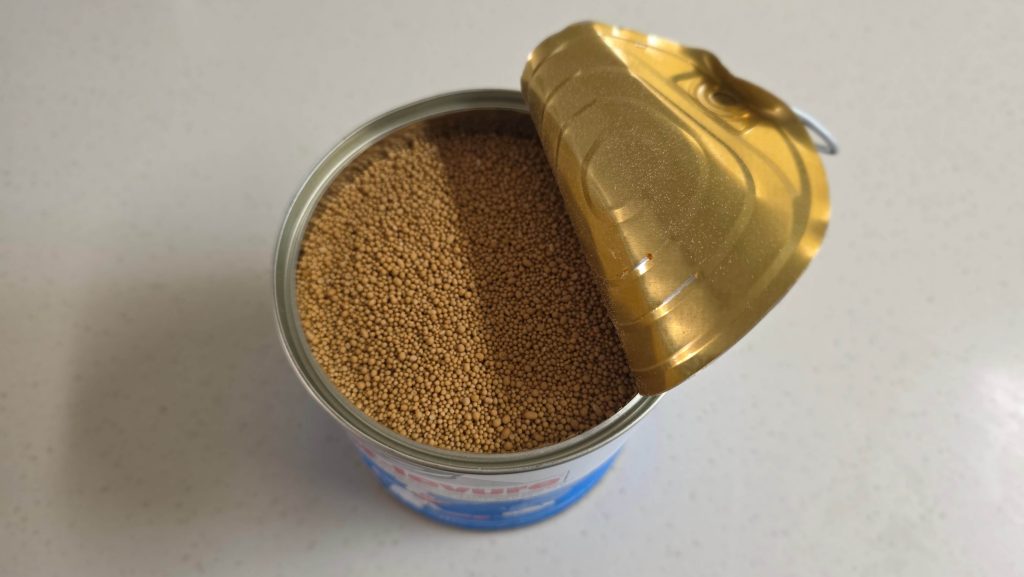
The lid of the large can was unusually hard to open. I had opened the same kind of can before without much trouble, but this one would not cooperate.
He’s stronger than I am.
I carried it into his study.
“Can you try this?”
He tried. But his hands looked a little awkward around the lid, and soon he said he couldn’t open it either.
Well, that wasn’t much help.
I took the can back.
“I’ll figure it out.”
He asked if there was a knife.
“I’ll take care of it,” I said again.
Then my husband came out of his study.
“Why don’t you just pour it into the empty container?”
Then he added,
“Don’t be so stubborn.”
I heard the irritation in his voice again.
But strangely, it didn’t bother me much.
Oh. Maybe I’ve been more stubborn than I realized.
I looked at his face.
He seemed concerned.
The lid was metal. If I kept trying to pry it open, I could cut my hand.
“I’m going to divide it into zip-top bags. I’m not trying to force it open.”
He listened, then picked up a bag of snacks from the dining table.
“Our daughter likes these,” he said with a smile, and went back to his study.
Suddenly, I didn’t want to make bread anymore.
I hadn’t even added the yeast yet.
Just milk and sugar were sitting in the bowl.
I covered it, put it in the refrigerator, and went to lie down.
Then It Was My Turn
I was stretched out on the bed, writing about what had just happened, when my husband came in to get his underwear before taking a shower.
He looked at me.
“You’ve gained weight,” he said. “Don’t eat anything after dinner.”
“Oh, just hurry up and get ready to go.”
This time, I didn’t calmly observe the irritation.
It came straight into my voice.
Then, in a surprisingly calm voice, he said,
“It’s not good for your health.”
Then he went to take a shower.
I almost laughed.
There it was.
I could notice my husband’s irritation twice that morning, but when he commented on my weight, my own irritation came out before I had time to observe anything.
And I had plenty I could have said.
He had been trying to lose weight himself, and his way of dieting was very much his own.
Late one afternoon, he got hungry in the press room, ate a cracker, then stopped at a cafe for a bagel with cream cheese instead of a proper meal. He told me he didn’t eat dinner that evening.
Just a few minutes earlier, he had walked away with a bag of snacks.
And before leaving for the wedding, he was planning to eat the red-bean bun.
I could have said something.
But I didn’t.
By then, the whole morning had begun to amuse me.
For years, when I heard irritation in my husband’s voice, my question was:
Why is he annoyed with me?
That morning, though, my question was different.
Oh. Irritation. What is that?
There was no with me in the question.
And a little later, when the irritation was mine, he didn’t pick it up and send it back.
He just went to take a shower.
The morning continued.
I was lying on the bed, writing about the whole thing.
Three little moments of irritation had come and gone.
None of them became an argument.
The bun was still a bun.
The yeast was still yeast.
My stomach was still my stomach.
And the morning was still the morning.