


My Husband’s Bad Mood
For years, there was something
I couldn’t understand about my husband.
Every now and then,
he would become quiet.
His face would look tense.
He would say very little.
Sometimes he seemed irritated.
Sometimes he would close a door
a little harder than usual.
Nothing dramatic.
Just enough
for me to notice.
And once I noticed,
I couldn’t stop noticing.
Was he upset?
Did I do something wrong?
Was something bothering him?
Had I said something I shouldn’t have?
It wasn’t really
the kind of situation
you ask about directly.
Nothing had happened.
At least,
not that I could point to.
So instead,
I filled in the blanks.
I became
a little quieter.
A little more careful.
I paid more attention.
Sometimes,
I cooked foods
I thought might help.
Looking back,
I realize how often
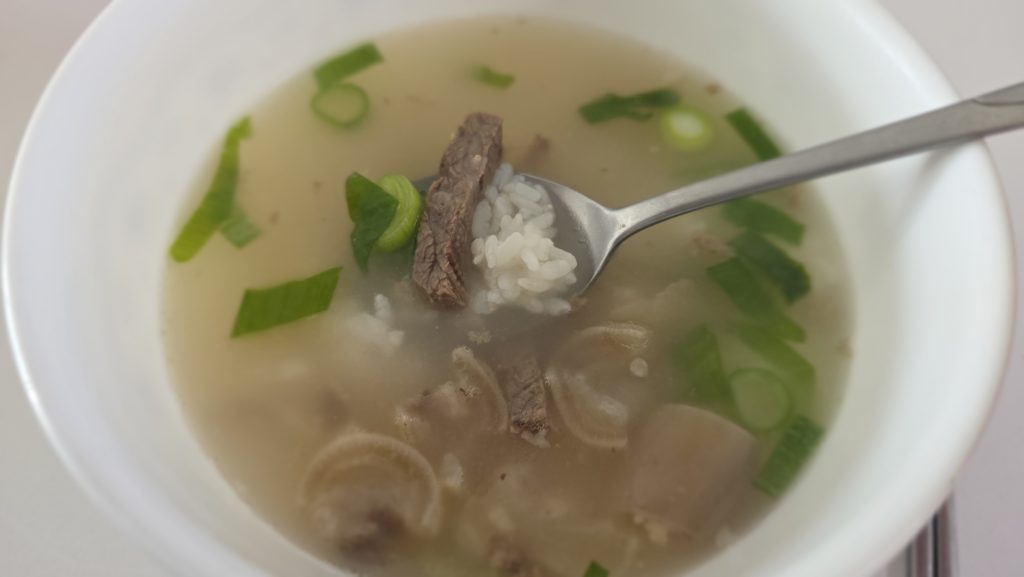
I made beef bone soup
during seasonal changes.
At the time,
it felt perfectly reasonable.
Maybe he wasn’t eating well.
Maybe he needed something.
Maybe I should do a little more.
I never said those things out loud.
But they were there,
quietly shaping
what I did.
The Part I Didn’t See
The strange thing is,
I didn’t actually know
what was wrong.
I was responding to
what I imagined
might be happening.
A look that felt different.
A tone that felt different.
A door closing
a little harder than usual.
And from there,
my mind filled in the rest.
Mid-point
Before I knew what was happening,
I was already adjusting.
The Answer I Never Got
What made it difficult
wasn’t just that
I didn’t know.
It was that I wanted
an answer.
I wanted reassurance.
I wanted to hear,
“No, nothing’s wrong.”
Or,
“It’s not about you.”
But I never really got
the answer I was looking for.
My husband wasn’t the type
to talk much.
A few days would pass.
His mood would seem different.
Then life would return to normal.
And I was left with
a blank space.
So I filled it.
With guesses.
With stories.
With adjustments.
For years,
I thought I needed
more information.
Looking back,
what I really wanted
was relief.
What I Finally Saw
After we moved to Daegu,
something changed.
Not because I found
a solution.
But because I started
observing.
Instead of trying
to figure it out,
I watched.
And eventually,
I noticed a pattern.
The quiet days
almost always appeared
when he wasn’t feeling well.
A cold.
Fatigue.
A hangover.
A body that simply
didn’t have much energy.
That was it.
There was no hidden message.
No unspoken conflict.
No mystery to solve.
Most of the time,
it had nothing to do with me.
One day,
years later,
I casually asked,
“Were those times usually
because you weren’t feeling well?”
“Yeah.”
That was the answer.
Just one word.
Years of wondering.
One word.
Honestly,
I had to laugh.
That’s Why It Felt Heavy
For a long time,
I thought adjusting itself
was the problem.
But now,
I see something else.
The situation happened.
Then it passed.
His body recovered.
His energy returned.
Life continued.
But I stayed there.
Thinking.
Guessing.
Adjusting.
Carrying something
long after the moment
had already ended.
Mid-point
The situation ended.
But I didn’t.
This Afternoon
This afternoon,
my husband told me
he didn’t need to pick up
his father after work after all.
“My father said
he has something to do.
He told me not to come.”
Years ago,
I would have stayed with it.
Why?
What happened?
Is something wrong?
Did his sister make other plans?
Does his father feel uncomfortable?
I would have filled in
every blank space.
One story after another.
Instead,
I simply said,
“That’s good.”
And that was the end of it.
No guessing.
No story.
No carrying it around.
Just one moment,
followed by the next.
A Simple Reset
Looking back,
I don’t think I was trying
to control anything.
I was trying
to fill in the blanks.
The spaces
where I didn’t know.
The spaces
where I couldn’t be sure.
The spaces
where I wanted reassurance.
And maybe
a lot of adjusting
starts there.
Not because we’re careless.
Not because we’re controlling.
But because
we struggle to stay with
what we don’t know.
For years,
I thought I needed
more answers.
Now,
I notice something different.
Sometimes,
the situation ends.
And the blank spaces
don’t need to be filled.
Sometimes,
they can simply stay blank.
And life goes on.
So do I.