

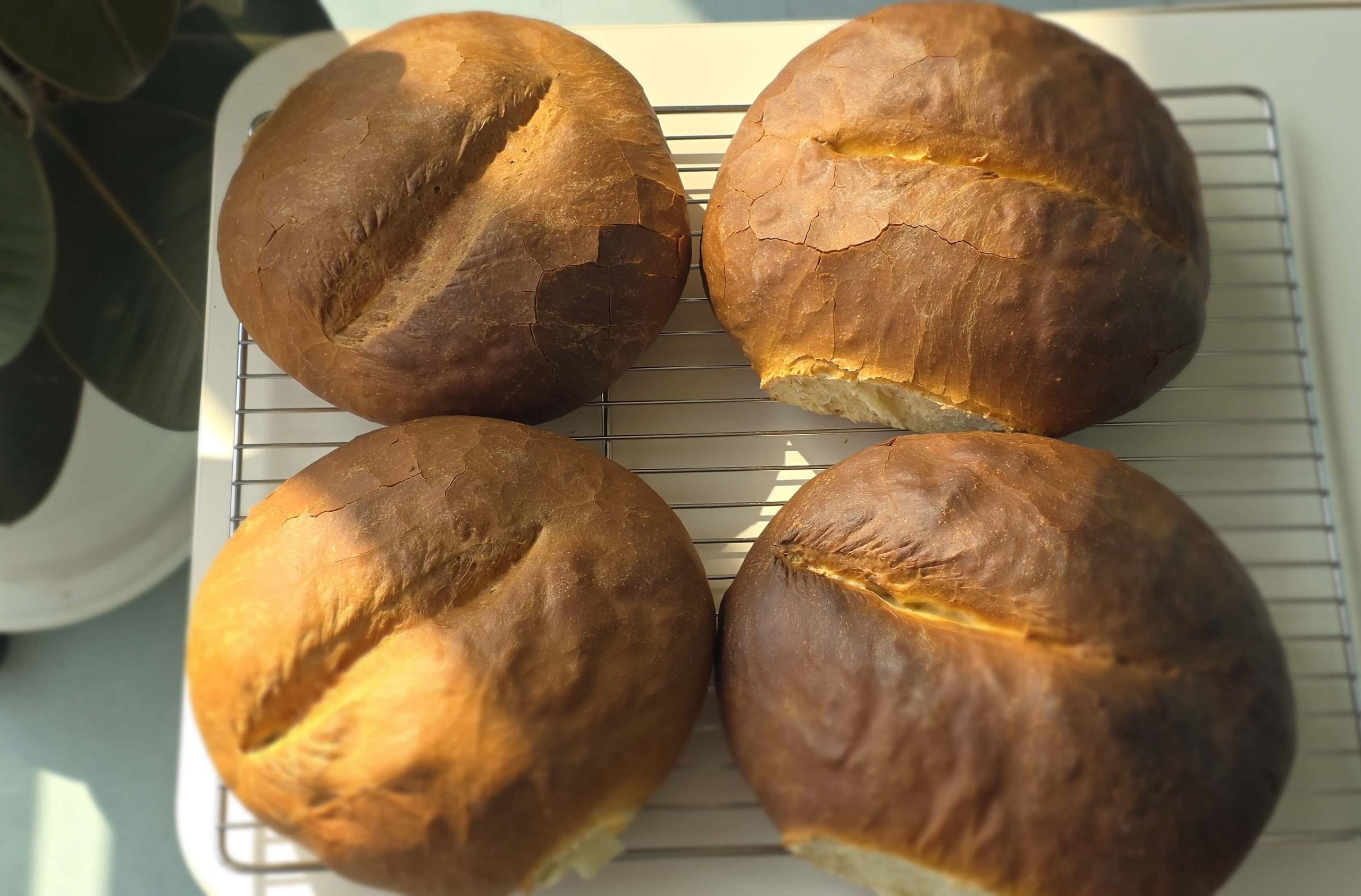
It was a quiet night in the kitchen.
I was standing beside the table, my hands deep in a bowl of dough.
My son came over and looked at me.
“Making bread?”
“Yeah.”
He watched for a moment, his eyes following my hands moving through the dough.
“Can I try?”
“Sure.”
He touched the dough carefully.
“Uh… hah… hahaha…”
I looked up, surprised.
“Why?”
“It just feels so good,” he said, smiling.
“Yeah… it really does. That’s why I keep making bread.”
I wasn’t always someone who liked bread. I was more of a rice person.
Back in college, my roommate would often skip rice and just eat bread instead. But I always chose rice.
Then I got married.
My husband could live on bread alone.
When he was younger, he went on a reporting trip to Europe for over a month and lived almost entirely on bread. He said he never missed rice. The bread there was so good.
On weekends, we would stop by a bakery near our home, fill a bag with fresh bread, and have a simple brunch together.
I didn’t have to cook.
And slowly, I began to like bread too.
I loved it enough that I bought a bread machine and started baking almost every day. All I had to do was add the ingredients, and a warm loaf would come out.
The smell of freshly baked bread filled the house.
My husband loved eating it while it was still warm.
We did that for more than a year.
Then we started gaining weight.
My husband, me, even the kids.
I watched my husband’s belly getting bigger and eventually stopped making bread.
For more than a year, I didn’t bake any at home. We didn’t even buy it from bakeries.
And no one ever said,
“Let’s have bread.”
We just went back to eating rice.
Bread Came Back
One day, I stopped by a friend’s office.
We started talking about bread.
“Bread doesn’t seem to sit very well with me,” I said.
“If you ferment the dough slowly in the fridge, it’s much easier on your digestion.”
“How do you do that?” I asked.
“Just leave the dough in the fridge for eight hours or longer, then take it out and bake it.”
I had never heard of cold fermentation before.
Oh, really?
I wanted to try it.
I used my bread machine just for the dough cycle, then put the dough in the fridge. Later, I took it out, roughly shaped it, and baked it in a loaf pan.
The bread wasn’t soft at all. The crust was a little firm, and the inside was slightly coarse.
But it smelled good.
It tasted good too.
And after eating it, I felt fine.
My husband said it reminded him of the bread he had eaten in Europe.
“This is the best bread,” he said. “Especially because you made it.”
I brought some to my friend.
She smelled it first, then took a bite.
“Passed,” she said.
We laughed.
After that, I started making bread again.
Folding It by Hand
One day, a book caught my eye at a bookstore.
Cold Fermentation Bread Dough.
It explained how cold fermentation makes bread easier on the body, and how you can make bread at home simply by folding the dough with your hands.
Folding it with my hands?
I bought the book.
At home, I tried it.
I mixed the ingredients roughly in a bowl with a spatula. Then I wet my hands slightly and began folding the dough.
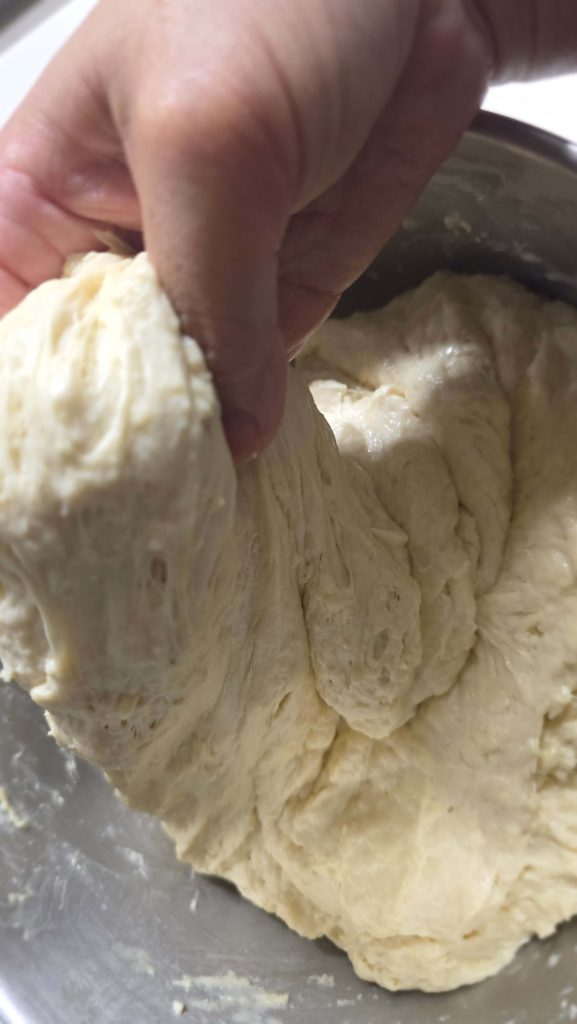
Turn the bowl a quarter turn. Fold the dough eight times. Wait fifteen minutes.
Then repeat.
Four times in total.
Is this really enough?
Still unsure, I put the dough in the fridge and left it overnight.
The next day, I took it out.
It had risen beautifully.
I roughly shaped it and baked it. The flavor was deeper than the bread I had made with the bread machine.
From then on, I folded the dough by hand.
The Feel of the Dough
Then one day, I looked at the spatula.
Do I even need this?
What would it feel like to use my hands from the beginning?
So I tried it.
The gentle smell of organic flour, a slightly tangy scent from the yeast, a soft sweetness from the sugar—they all came together.
And in my hands, there was so much to feel.
Softness.
Moisture.
The way the dough gathered, small and large lumps coming together, clinging gently to my hands.
I just moved it freely, following my own rhythm.
And slowly, it became one.
In the quiet of the night, standing alone in the kitchen, I watched the dough come together in my hands.
It became a moment just for me.
A kind of quiet healing I had never expected.