

“Dad seems to have the hardest time with summer in our family. He was like that last year, and this summer was the same.”
Sitting by the window at a cafe with our Americanos, I said it with a laugh.
“Yeah. He looked like the heat really got to him.”
“But air conditioning wasn’t the answer either,” I said.
We don’t have an air conditioner at home, so he went out and stayed under the AC until late. Then he started coughing and said it was because of the AC.
I took a sip of coffee and laughed.
“So I ended up making gomguk.”
My daughter looked at me with a smile.
“We really enjoyed that first clear broth, right? Then we didn’t really want any more.”
But my husband loved it and kept eating it. He liked the second broth too, but by the third one he was like, ‘Again?’ So I ate the last bowl with rice in it and enjoyed it.
We laughed together.
“But you know what? Later I got curious and asked him, ‘Did you mean you wanted me to make gomguk, or just go buy some?’”
I looked at her.
“He said he meant we should buy it.”
We both burst out laughing.
On that hot summer day, my husband had said just one thing while eating lunch.
“Let’s have gomtang or something.”
He was eating slowly and looked a little low on energy.
All kinds of thoughts came up.
Does he not like the side dishes?
He really must be worn out from the heat.
Am I supposed to make gomguk in this weather?
But why did he say gomtang instead of gomguk?
I didn’t ask him anything else.
I went to the bedroom and lay down. I put a cool sheet mask on my face and set the timer on my phone for 15 minutes.
I don’t really feel like doing it right now.
The old me would have dragged my heavy body up and gone out that very day. I would have gone to the butcher shop, bought beef bones and brisket, and boiled a big pot of gomguk so my husband could have a bowl of hot soup for dinner.
But for the first time in his life, my husband’s weight had gone over 90 kilograms, and he had been skipping dinner for several days to lose weight.
He didn’t need gomguk that evening.
The next day was still hot, and I still didn’t feel like moving.
And if I made gomguk, we needed kimchi.
We were out of kimchi. The thought of making kimchi too made me want to move even less.
The morning after that, I wrote at a cafe and left in a good mood.
Oh, it’s a little cooler today.
On the way home, I stopped at the butcher shop and bought beef bones and brisket.
At home, I put the bones in a large bowl and ran cold water over them to draw out the blood.
Then I ate a simple breakfast first.
A butcher had once told me that it was best to soak the bones in cold water for two hours, so that was what I used to do.
That day, I soaked them for only 30 minutes.
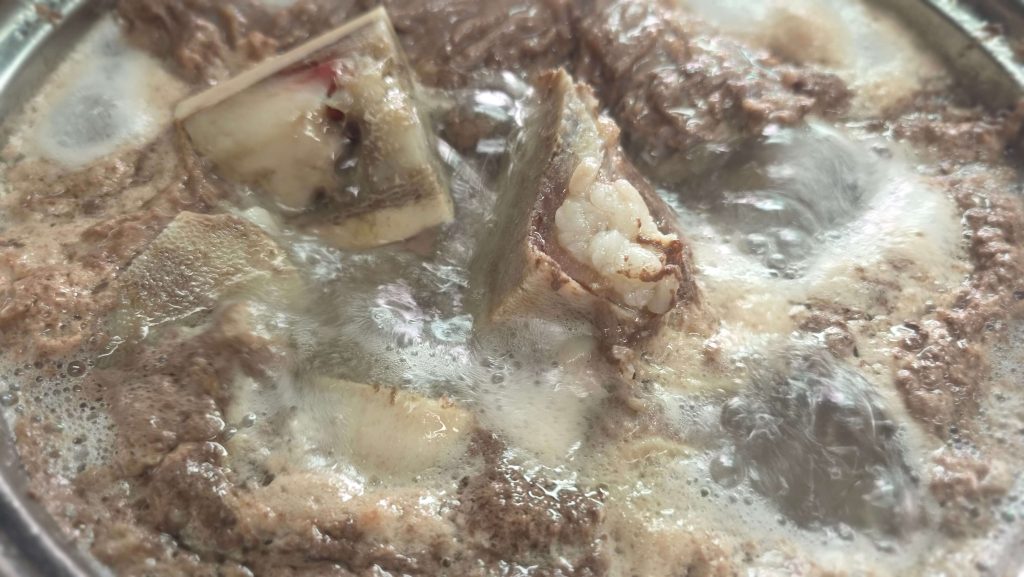
Then I put the bones and brisket into my stockpot and poured in just enough water to cover the bones. I put on the lid and turned the gas burner up high.
The pot kept bubbling away on the stove.
My daughter came into the kitchen.
“Ugh, it’s hot.”
Then she went back to her room.
With one fan running, I washed one bunch of chives. I cut them into three large sections and took some leftover kimchi seasoning out of the freezer.
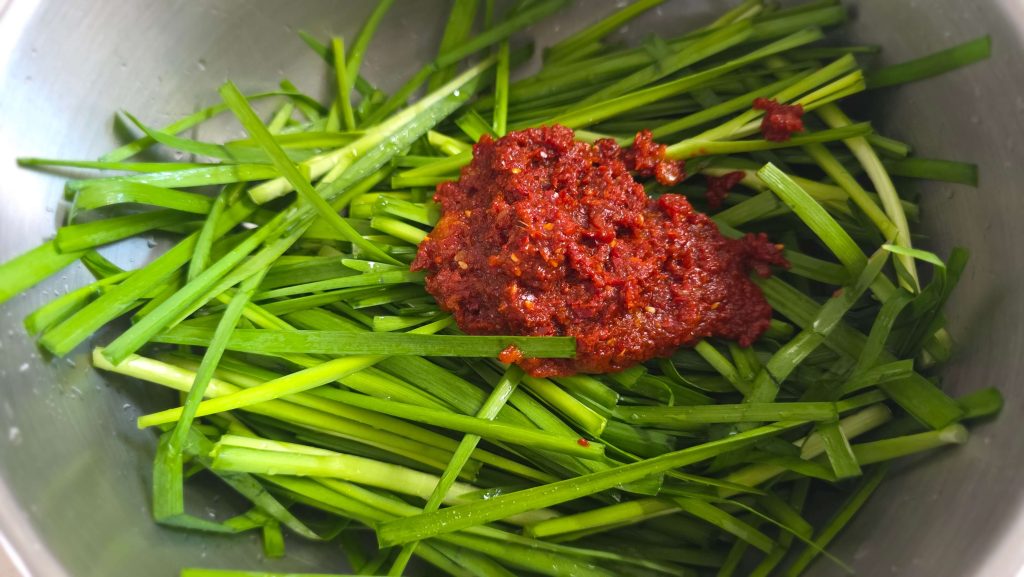
I mixed the chives with the seasoning, tasted them, then added a little plum syrup and salt.
Oh, it’s delicious.
In the past, when I made chive kimchi, I made three or four bunches at a time. If I made a lot, I didn’t have to make it often, and I liked how the flavor deepened as the seasoning soaked in.
But that day, for the first time, I made chive kimchi as quickly as I would make a side dish. The old me, who used to leave the chives whole and arrange them neatly in a kimchi container, would probably have found this hard to imagine.
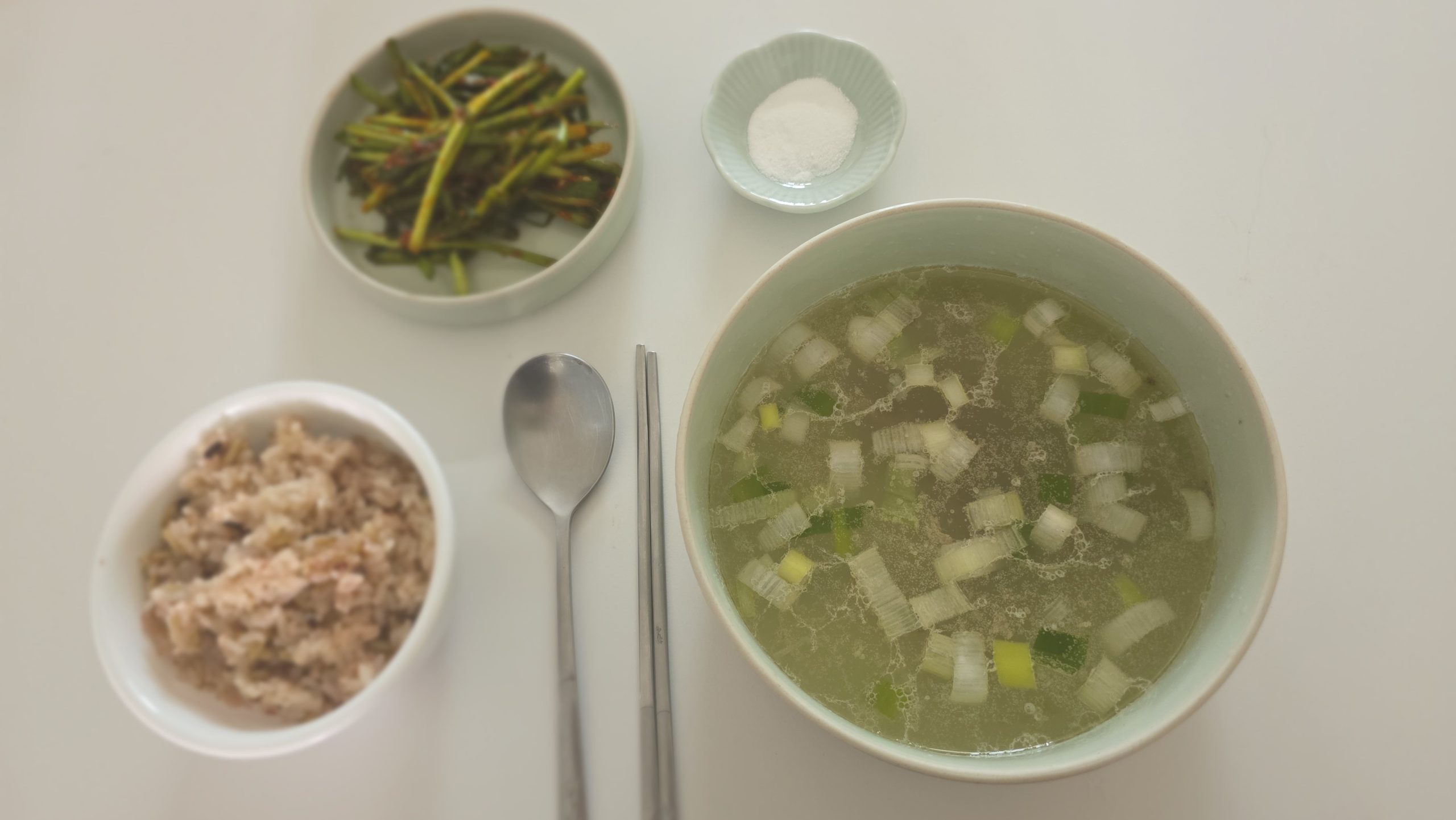
I put the hot gomguk and chive kimchi on the table for my husband.
“Oh, this chive kimchi is good.”
He didn’t say anything about the gomguk.
He put the chive kimchi into the soup, added rice, and ate it all.
My son, daughter, and I enjoyed it too. My son went back for more broth.
By the end of the meal, the first batch of broth was almost gone.
I put the stockpot, still full of bones, into the refrigerator. It is just the right size to fit on the large shelf with the lid on.
The next day, I added more water and boiled the bones again.
I gave my husband the new broth with chive kimchi for lunch and again for an early dinner.
“Oh, your gomguk really is the best.”
This time he didn’t mention the chive kimchi. He talked about the gomguk.
He said it felt good to eat it hot and work up a sweat.
My daughter, son, and I weren’t really interested.
One bowl had been enough.
The next day, I added more water and boiled the bones again.
At lunch, I served my husband gomguk and chive kimchi.
“Again?”
I laughed.
“You have to keep eating it.”
There was actually something I left unsaid.
If you want to get your energy back.
After that, I threw away the bones. There was a little broth left, so I put it in a smaller pot and kept it in the refrigerator.
Later, I took it out. A thick layer of fat had hardened on top. I skimmed it off, and underneath, the broth had set like jelly.
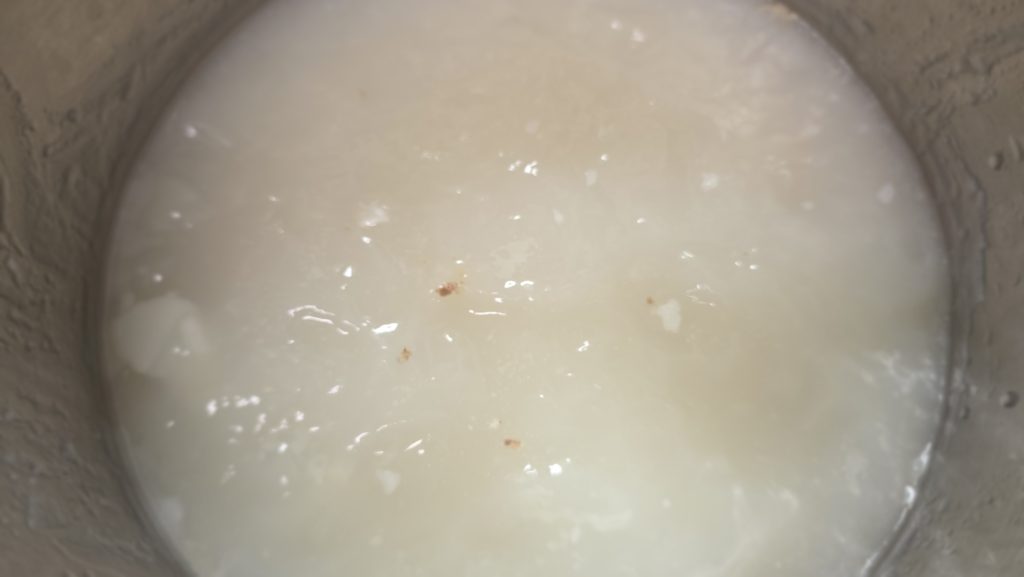
I heated it up, added the remaining brisket, some green onions, and rice, and ate the last bowl myself.
The First Gomguk I Made
When I was a young newlywed, my mother-in-law had surgery for a back problem and was in the hospital.
I asked my mother how to make gomguk, Korean beef bone soup, and made it for the first time in my life.
I put the bones into a large stockpot, added water, and boiled them. Then I poured the broth into another large pot, added fresh water to the bones, and boiled them again. I did that a few times and combined all the broth.
It took a long time.
I brought it to my mother-in-law in the hospital.
“You made gomguk? The broth looks a little thin. You should have asked Grandma to make it.”
At the time, my husband’s grandmother was still living with my in-laws and doing some of the cooking.
Even after saying that, my mother-in-law made sure to drink the clear broth I had brought her.
That first gomguk was a lot of work. And it wasn’t even particularly good.
Many years later, on Chobok, one of the hottest times of summer in Korea, I went to visit my in-laws with a cold watermelon and some very good beef bones.
“We could have bought bones and made it ourselves.”
I smiled at my mother-in-law.
“These are really good bones from an organic market. I thought you might like to try them.”
Right in front of me, she made gomguk in about 30 or 40 minutes.
She didn’t soak the bones in cold water for hours. She simply rinsed them once in cold water and put them into a large pot.
She didn’t even use the brisket I had brought.
She poured in just enough water to cover the bones and boiled them hard on the gas stove.
The broth quickly turned milky.
And it was delicious.
Ah. These really are good bones. No wonder they were expensive.
After that, I started making gomguk at home the way my mother-in-law did.
Whenever the seasons changed and I felt my energy drop, I wanted gomguk.
Our three children were still students then. They loved eating it with plenty of meat, dipping the meat in salt as they ate.
Over time, my gomguk changed into my own version.
A butcher told me that adding extra bones would make the broth richer, so I started cooking them together with the beef bones.
Someone told me beef shank was good, so I tried that. Then I tried brisket. Our family liked brisket better than shank.
I tried taking the brisket out of the soup and pulling it apart by hand. Later, simply slicing it with a knife tasted just as good.
I wondered what the soup would taste like with ox feet, so I tried those too.
The broth came out more yellow, but our family preferred the cleaner taste of beef bones.
Even adding fresh water to the same bones was part of the fun because each batch tasted a little different.
The first batch was clear and light.
After we finished that, I added fresh water and boiled the bones again. The second broth became a little richer.
Then I added water. The third broth was rich and especially delicious.
But it all depended on where I bought the bones and what kind they were.
With some bones, even when I added extra bones, a clear and flavorful broth came out right away.
With others, even after soaking them for two hours, blood still came out and I had to keep boiling them hard before the broth began to taste good. I stopped buying those bones.
Some bones tasted best in the second broth. Others were better in the third.
When I made gomguk, I also liked that I didn’t need to make many side dishes. Kimchi was enough.
Sometimes we wanted to keep eating it, so I would buy more beef bones and brisket. I would take out some old bones, add the fresh bones and brisket, and make a fourth batch. That was delicious too.
My Daughter Remembered
“Is gomguk a summer food?”
My daughter asked.
“You can eat it anytime.”
She laughed.
“But you always made it in summer.”
Oh.
Whenever I saw my family worn out and low on energy in the summer heat, I must have thought,
It’s time to make gomguk.
One sweltering summer day, I piled beef bones and brisket onto the checkout counter at a supermarket.
The woman at the register opened her eyes wide.
“You’re going to make gomguk at home in this heat?”
“Oh, it’s fine.”
I laughed, carried the heavy bags home, and started by running cold water over the bones in the kitchen sink.
Back then, I didn’t even think of it as hard work.
And I happily ate that gomguk for several days too.
Right. Fight heat with heat.
For more than 20 years, I made gomguk at least four times a year.
But this year, I didn’t really want it anymore.
“Let’s have gomtang or something.”
That one sentence from my husband eventually got me to make a pot of gomguk.
And strangely, I realized that one bowl was already enough.
My daughter felt the same way.
So did my son.
My older daughter, who lives on her own, didn’t even need that first bowl.
And my husband, unlike before, didn’t really need bowl after bowl of gomguk either.
Since we moved into this house last year and my son began living with us again, the way we eat at home has changed a lot.
Without really noticing it, enjoying one simple, delicious meal had become much more our rhythm.
Now I have more choices.
We can simply go out and have a bowl of gomtang.
Or one day, if I really want my own gomguk.