

I went to the hospital with my mother-in-law.
Her hearing isn’t very good,
so when the young doctor began asking questions,
she couldn’t catch everything.
I found myself answering for her.
What struck me wasn’t the questions themselves,
but the way he asked them.
He smiled lightly,
his tone quick and bright,
almost rhythmic.
I had never seen a doctor like that before.
Even considering that he was not a senior professor
but a young doctor still in training,
there was something different.
He didn’t seem to be trying to fit into
what a “doctor” is supposed to be.
He was simply… himself.
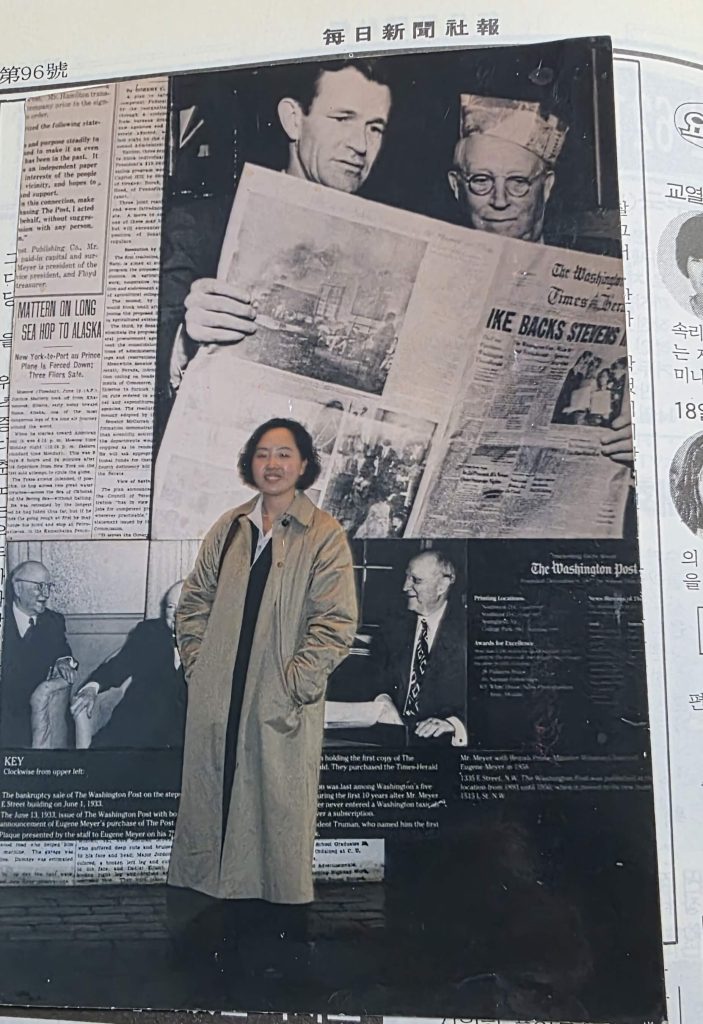
back when I was still becoming who I thought I needed to be.
And in that moment,
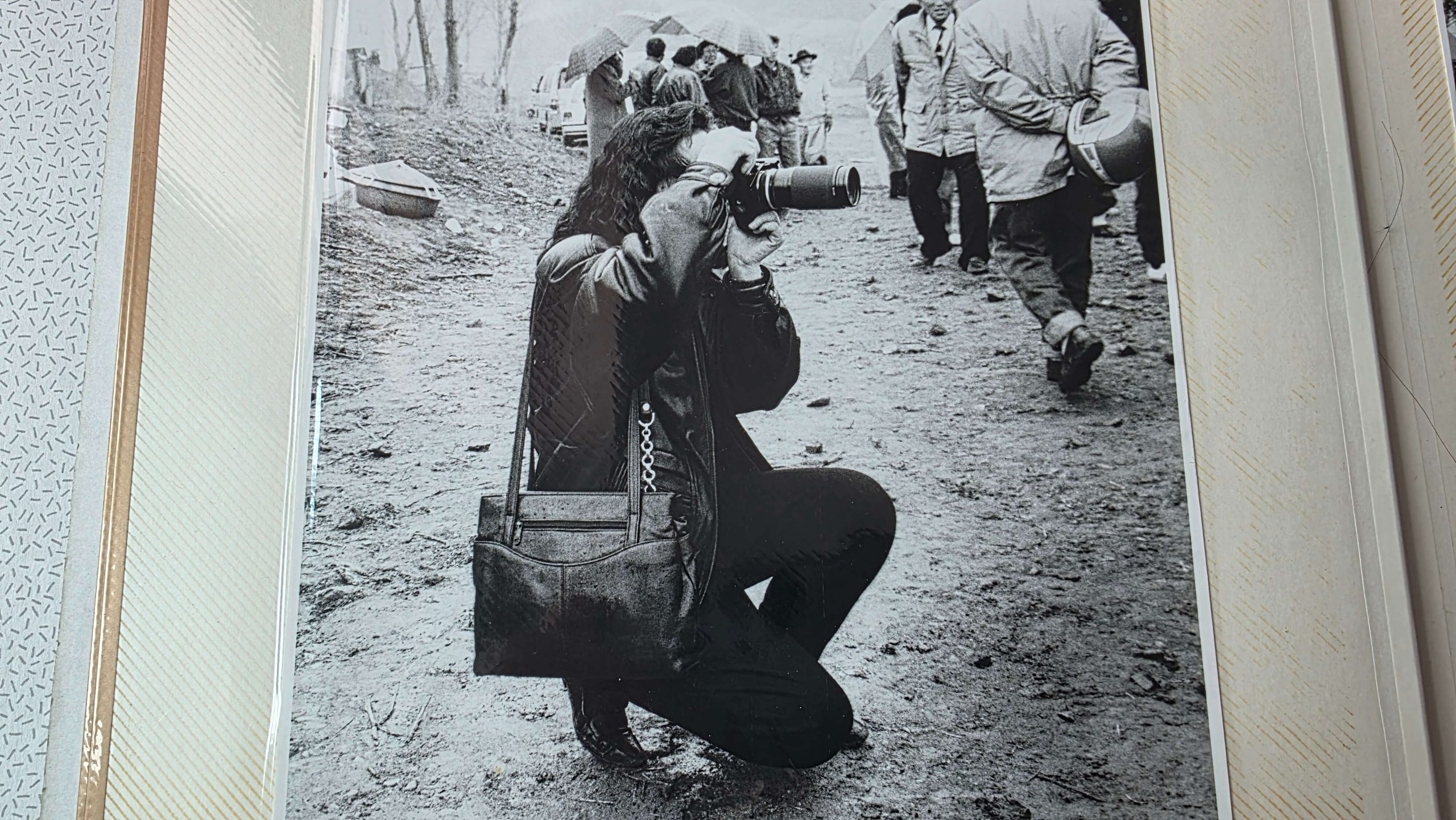
I thought of my years as a journalist.
I didn’t realize it then.
I was losing myself in roles—
believing I was simply being adaptable.
The First Thing I Changed Was My Voice
The first thing I changed,
after becoming a reporter at a daily newspaper,
was my voice.
I hadn’t originally dreamed of becoming a journalist.
From a young age, I had been part of my school’s broadcasting club,
speaking as an announcer,
dreaming of becoming one.
But life took a different direction.
After leaving my hometown for college,
I found myself returning—
and becoming a reporter instead.
My parents were happy.
I was relieved.
I no longer had to continue the exhausting path of competitive exams.
So I did what felt necessary.
To adapt quickly to the newsroom,
I changed the way I spoke.
I let go of the announcer’s standard Korean,
and began speaking in the local dialect—
the way my colleagues did.
Sometimes I think—
it’s a bit of a shame I lost that announcer’s voice.
It was immediate.
And it felt natural.
Years later,
when I casually mentioned that I had once been an announcer,
my colleagues were surprised.
They had never imagined it.
I had blended in completely.
I Became Who I Needed to Be
I quickly learned what my role required of me.
I knew how to work with people.
I created a sense of ease among colleagues,
and helped build a cooperative atmosphere.
At team dinners,
I naturally took the lead in lifting the mood.
I was good at it.
People liked having me around.
Sometimes, I even drank for a male colleague
who was struggling to keep up with our seniors.
There were moments when I was noticed.
When I was working in the political desk,
I was told to stay focused—
that there were people in politics who had their eyes on me.
Later, after I got married and had a child,
I moved into lifestyle and feature sections.
I created pages that hadn’t existed before,
and they were well received.
The more I did,
the more work I was given.
I took on more pages,
more projects,
even special features like surveys.
And I worked—hard.
And then,
a question began to form.
Why was I the one doing so much?
Others seemed to be doing less,
focusing instead on positioning themselves,
moving toward stronger departments,
getting closer to promotion.
And I was… just working.
I wasn’t just doing my job well.
I was becoming the role itself.
Somewhere Along the Way, I Lost Myself
I worked hard.
I believed in what I was doing.
I had a sense of responsibility—
a clear idea of what a newspaper should be,
and how I should contribute to it.
But over time,
something began to change.
The number of pages I was responsible for kept growing.
And slowly,
I found myself just trying to fill them.
What had once been driven by belief and purpose
became something expected.
Among my colleagues,
it was no longer something noticeable.
It was simply… my role.
Nothing more,
nothing less.
And at some point,
I realized
I was no longer the confident reporter
who had once worked with conviction.
I felt more like an employee—
just doing what needed to be done.
It no longer felt meaningful.
I had done enough.
So I left.
And I went to study in the UK.
And Then, I Became a Daughter-in-Law
This time,
it wasn’t in a newsroom.
It was in a family.
As a daughter-in-law,
I followed the way things were done.
I prepared food for large family gatherings,
sometimes for thirty people or more.
I stayed up through the night,
making sure everything was ready.
And I did it willingly.
My mother-in-law wasn’t very strong.
After preparing food together for family gatherings,
she would often feel unwell—
dizzy, or too weak to get up.
So I told her to rest.
I said I would take care of everything.
And from that point on,
I did.
I stayed up through the night,
preparing all the food on my own.
I did it with energy.
I did it with a sense of purpose.
When the relatives came,
the table was full.
They ate well,
took food home,
and the gatherings passed smoothly.
My in-laws were satisfied.
And I was, too.
Looking back,
it was almost the same pattern.
Different roles, same pattern—
I gave myself fully, until there was nothing left of me.
But over time,
something shifted.
What I did
slowly became something expected.
It was no longer seen as a choice I had made,
but simply my role.
And within that role,
I began to disappear.
The meaning I had felt—
the reason I had done it with such willingness—
was no longer something I could find
in the people around me.
And at some point,
I realized
I had done enough.
Continuing like this
no longer made sense.
So something in me shifted.
And as my husband’s work shifted,
I found myself moving with it.
I Had Been Choosing All Along
Looking back,
I thought I had been losing myself in roles.
But that wasn’t the whole story.
I chose to change my voice.
I chose to do my work well.
I chose to take responsibility—
again and again,
in different places,
in different roles.
And when it no longer felt meaningful,
I chose to step away.
I thought I had lost myself.
But I had been choosing all along.
I wasn’t just adapting.
I was choosing—
in my own way.
When I felt myself disappearing inside a role,
I didn’t keep adjusting.
I chose.
It wasn’t easy.
But it was a decision
to return to myself.
And looking back,
I see it more clearly now.
I had been stopping—
again and again,
to come back to who I am.
And each time,
I found my way back to myself.
And slowly,
I began to notice something small—
not a big decision,
not a dramatic change—
just a brief pause.
And something shifted.