

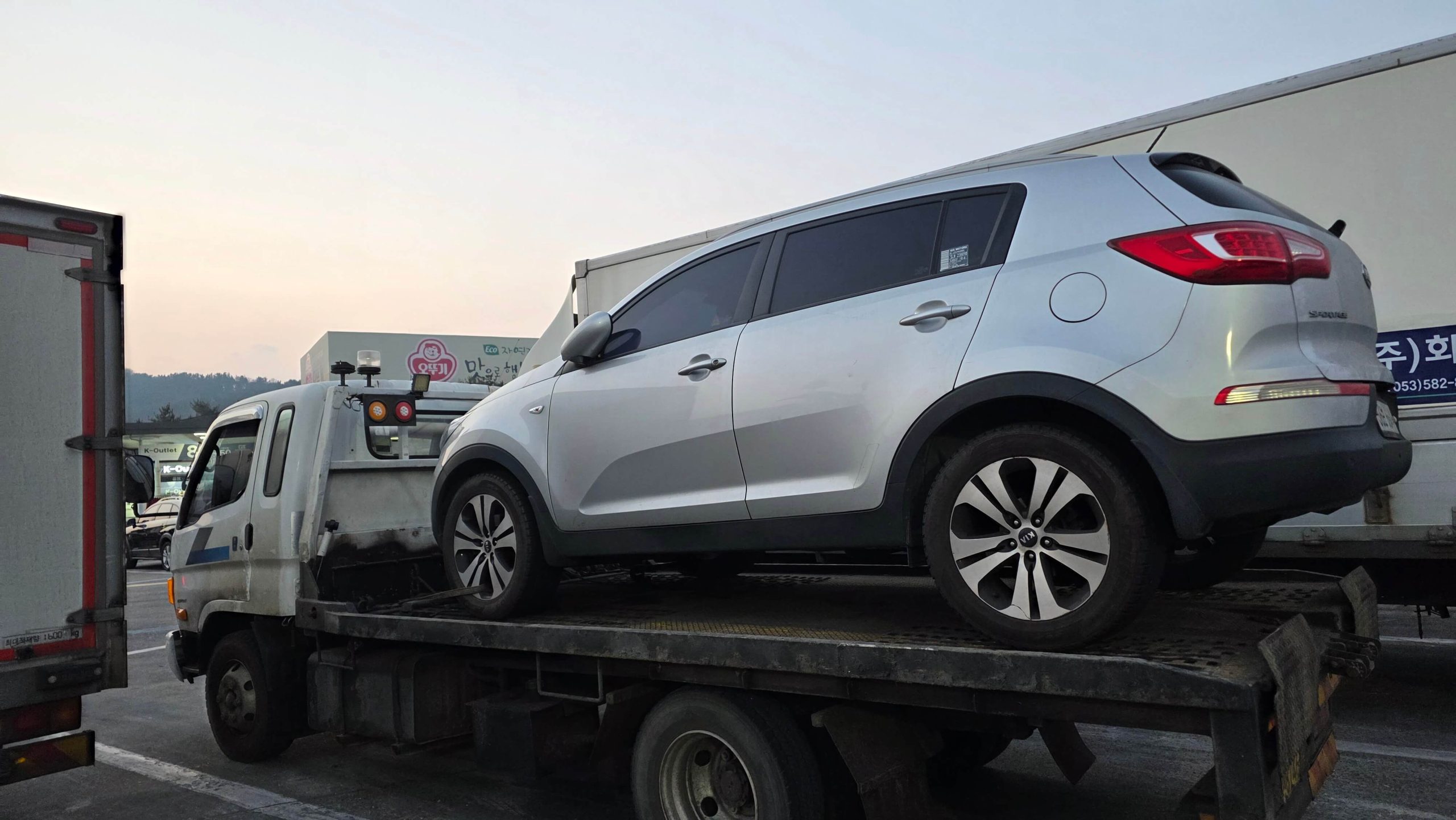
My car stopped on the highway.
It’s a fifteen-year-old manual car.
Traffic had slowed down and come to a stop.
When cars began moving again,
I moved the gear to start.
But it didn’t work.
My car wouldn’t move.
Suddenly, the car behind me honked its horn
and quickly changed lanes.
It was a highway construction truck.
If it had been a regular car,
it might have hit me.
Seeing the truck move out of the lane,
cars behind it began changing lanes
and speeding past.
I kept trying to get into first gear,
while the turn signal kept blinking.
After several attempts,
I finally managed it.
It slowly began to move,
and I made my way to the far right lane.
About twenty minutes later,
a highway rest area came into view.
I rolled into the parking area
and stopped in neutral.
I let out a long breath.
Sometimes control disappears in a single moment.
A small failure, and the whole situation changes direction.
A Pause at the Rest Area
When I stepped out, my legs felt weak.
The tension that had held my body tight suddenly released.
I looked up at the sky.
The sky was perfectly clear.
Yet my car had just broken down.
For a moment I simply stood there, trying to calm myself.
Then I decided to start with something simple.
The restroom.
After coming out, I sent a message to my older daughter.
“The car broke down on the highway.
I can’t make it today.
I’ll fix it and take the train tomorrow.”
Her reply came quickly.
“That could have been dangerous.
Please be careful on your way home.”
Reading her message made me feel relieved.
Then something caught my eye.
Right in front of the golf shop,
a pair of pants hanging on a rack.
Just 10,000 won.
Corduroy pants.
The fabric looked good, the design simple and comfortable—
perfect for everyday wear or golf practice.
“Do you have this in size 66?” I asked the staff member.
A few minutes later I was in the fitting room.
Normally I might have been too lazy to try on clothes.
But that day a curious thought crossed my mind.
Well, the day is already ruined.
I might as well take my time.
Sometimes the day we think is ruined
quietly becomes a different kind of day.
The pants fit perfectly.
“I’ll take these,” I said, still wearing them,
and began looking for a top to match.
Soon I walked out of the shop with a new pair of pants.
Right outside was a small coffee stand.
“Hot Americano with four ice cubes, please.”
I took the coffee to a seat by the window where I could see my Sportage.
After a sip, I sent my husband a message explaining what had happened.
His reply didn’t come right away.
He might be busy.
A few minutes later,
“Call the insurance company.”
His reply was only an instruction.
Not “Are you okay?”
I didn’t want to talk long with him.
I quickly ended the conversation.
I sipped my coffee and waited quietly for the tow truck.
The Manual Car I Trusted
You held on well.
For fifteen years.
You worked hard all that time.
Looking at you now,
you seemed old and tired.
Looking out at my car standing there outside,
memories began to surface.
Three kids in the back seat on the way to see a Marvel movie.
My husband in the passenger seat, glad he didn’t have to drive.
The kids liked it when I drove.
They thought their mom was the better driver.
Then another memory came to mind.
One day, on a narrow country road,
as we were driving onto a small bridge,
one of the rear wheels slipped off the edge.
The kids gasped.
My husband, who was driving, stayed calm.
“Get out slowly, one by one,” he told them.
The kids stepped out carefully.
Soon, people from the nearby houses came over.
Together, they pushed and lifted the rear wheel back onto the bridge.
The kids watched with wide eyes.
After that day,
driving the car mostly became my role.
This car felt like part of the family.
It had carried so many of our memories.
Even when others switched to automatic cars,
I kept driving this one.
I believed a manual car was safer.
I loved how its speed dropped the moment
I lifted my foot from the accelerator
before pressing the brake.
I liked how it responded exactly as I intended.
But today, I couldn’t control it.
It didn’t respond to my intention.
The First Doubt
Maybe it’s time to let you go.
Maybe I can’t trust you anymore.
For the first time, a thought like that crossed my mind.
If this had happened before,
I probably would have driven home,
thinking I could manage it.
But I couldn’t drive this car again
after it had stopped in the middle of the highway.
I felt uneasy.
A manual car I couldn’t control with confidence
was no longer a car I could trust.
I didn’t want to risk driving again
only to face the same situation.
Even if the towing fee was expensive,
it felt unavoidable.
Would it even be repairable?
If the repair cost was high,
was it worth fixing an old manual car?
Manual cars were already discontinued.
Would I have to drive an automatic now?
All kinds of thoughts filled my head.
Then a truck slowly pulled into the parking lot.
The Tow Truck Driver
I stood up and walked toward my car.
As the truck approached,
I realized it was the tow truck I had been waiting for.
The driver parked the truck in position to load the car
and stepped down.
“It’s a manual,” I said with a small nod.
“Should I load it?”
“You might want to take your bag with you,” he replied calmly.
“I’ll take care of the car.”
I felt a little uneasy.
I had never seen anyone drive my manual car properly.
Stalling once or twice was almost inevitable.
But, contrary to my worries,
the driver handled it with ease.
Even though the clutch had become stiff
and the gear was difficult to engage after the breakdown,
he moved the car smoothly
and loaded it onto the tow truck in one try,
without stalling the engine even once.
It was the first time I had seen someone handle my car like that.
The tow truck, now carrying my car safely, drove along the highway for quite a while before exiting at the tollgate.
To reach the repair shop near my home that I had requested,
it entered the opposite entrance ramp.
Sitting in the passenger seat of the tow truck, I thought to myself.
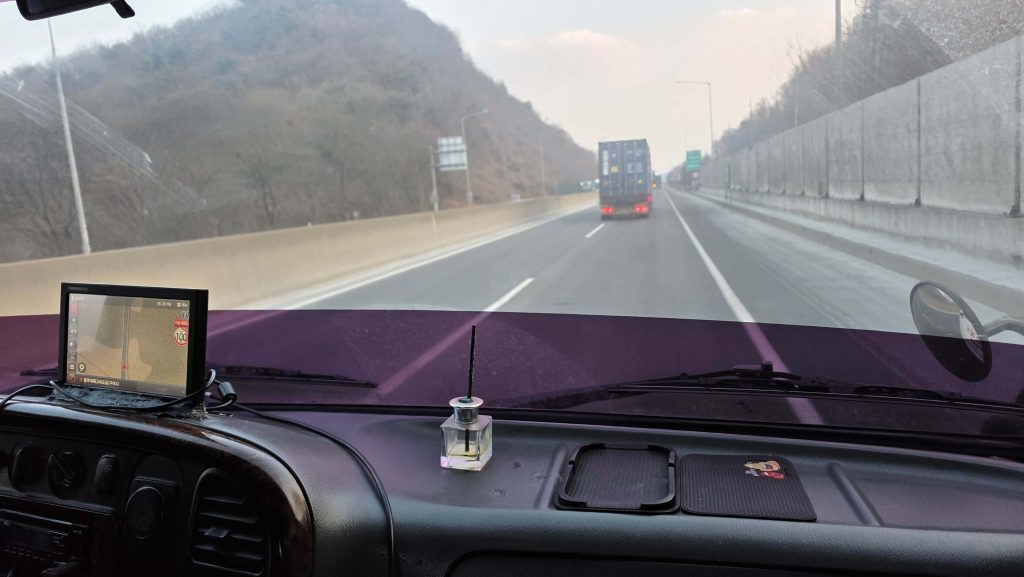
So this is what it feels like to ride in a tow truck.
It’s a truck, so it rattles a bit.
The seat is high. The view is wide and open.
It was my first time riding in a tow truck.
As I quietly tried to settle my mind, the driver asked,
“Are you comfortable sitting there?”
“Yes, I’m fine,” I replied.
The driver nodded and said,
“When you drive, the most important thing is that your passenger feels comfortable.
Drivers who speed just to show off their mood
usually end up in accidents sooner or later.”
The man was in his seventies.
He had spent his life towing accident cars from highways.
The first thing he asked was whether I was comfortable.
That alone made me feel at ease.
During the hour and a half drive to my destination,
we naturally began talking.
A Young Manual Car
“Ah, the tow truck is manual,” I said, glancing at the driver’s seat.
“These days even city buses are automatic.”
“I was really surprised to see how well you handled my car,” I added.
“I’ve never seen anyone drive it like that. Most people stall it right away.”
He smiled.
“It’s impressive that you still drive a manual,” he said.
“I like manual cars,” I replied.
“They feel more comfortable to me.
I started driving a manual when I was twenty-five.
So I’ve been driving one for more than thirty years.”
“I’ve driven this car for fifteen years,” I continued.
“It has about 140,000 kilometers on it.”
He smiled again.
“I’ve been driving manual cars for more than fifty years,” he said.
“This truck has over a million kilometers on it.”
A million kilometers.
Compared to that, my car—after fifteen years and 140,000 kilometers—
suddenly felt like a young one.
He said he was the owner of the towing company.
All the drivers had already been dispatched, so he had come out himself.
Watching him drive was fascinating.
At one point, as we slowed down near an interchange,
he kept the truck in fifth gear.
“You’re not shifting down,” I said.
“I just leave it in fifth and go with the flow,” he replied.
“I control the speed with the accelerator.
Press gently, release gently, and watch the road ahead.
The brake is only for when you really need it.”
Experience often looks simple.
But behind that calm movement lies a lifetime of rhythm.
Until then, I had believed I always had to shift to a lower gear when slowing down.
But the tow truck moved smoothly,
even as the speed dropped.
Suddenly the expensive towing fee no longer felt like a loss.
I felt as if I had just received a highway driving lesson.
During the rest of the drive, our conversation naturally widened—
to children, to work, and to life.
Before reaching the destination, he stopped briefly at a rest area.
“Would you like something to drink?” he asked.
I said I’d have whatever he was having.
He returned with two warm cans of soy milk.
The warmth helped my body relax.
By the time we reached the repair shop near my home,
the sky had grown dark.
He carefully unloaded my manual car.
The mechanic looked at it briefly.
“We can’t fix a transmission problem here,” he said.
“You’ll have to take it to a service center.”
“My home is very close,” I said.
“I think I can drive it there.”
The tow truck driver turned to me.
“Press the clutch all the way down,” he said.
“Then put it into first gear.”
He repeated it once more, firmly.
The mechanic, who had been listening nearby, suddenly said,
“Wait a moment.”
He got into the driver’s seat and tried the clutch.
“This isn’t really a repair,” he said.
“But we can adjust the clutch play. It might work temporarily.”
“The cost is 25,000 won.”
The tow truck driver nodded to me and walked back toward his truck.
“Thank you for helping me so late,” I said.
He raised a hand in farewell and drove away.
I watched the truck disappear down the road.
Then I picked up the paper bag with the corduroy pants I had bought earlier and walked home.
That night, I soaked quietly in a hot bath.
Finding the Rhythm Again
The next morning, the mechanic called.
He said the clutch play had been adjusted and the engine oil had been changed.
I could drive the car for a while longer and pick it up whenever I had time.
I was surprised.
The clutch felt smooth again under my foot, and the car seemed to have recovered its strength.
Just the day before, I had stood on the highway thinking I might have to let it go.
Now the car felt alive again, and I found myself feeling grateful for it.
That was when I realized something.
This car was no longer something I tried to control.
It had become something I moved with — in rhythm.
When the cold winter wind blows and I leave the car outside,
I can sense its condition changing.
So I park it in the underground garage to help it recover more quickly.
I listen to the sound when the engine starts.
I feel the clutch reaching the floor under my foot.
I shift gears by listening to the engine.
Little by little, I began to feel the car before thinking.
Driving this way, calmly and steadily,
my daughter now feels more comfortable riding with me.
This car was no longer something I tried to control.
It had become something I moved with — in rhythm.
For years I believed good driving meant control.
But good driving, like life, is often about rhythm.